
How to Fit Squarebody Door Speakers Right
Quick Takeaways
- Measure real clearance with the window down before cutting anything — catalog numbers lie. Depth matters more than size; a shallow 6.5" often fits where a deeper speaker won't. A truck-specific door panel gives you a known-good speaker location and skips the universal-pod look. Run fresh wire through a proper grommet, clear of the regulator and latch. Sound deadening the door does more than a pricier speaker — it kills rattles and tightens midbass.
If you've ever pulled a Squarebody door panel and thought "there's no way a modern speaker is going in here clean," you're not wrong. Figuring out how to fit Squarebody door speakers usually comes down to one thing — these trucks were never designed around the audio gear most owners want to run now. The factory setup was basic, door clearance is limited, and one bad cut can turn a good panel into garage wall art.
The good news is you don't need to hack up your truck to get better sound. If you approach the job like a builder instead of treating it like a universal stereo install, you can get a setup that fits right, looks right, and holds up when the truck actually gets used. This is the hands-on install guide — if you're still deciding on the panels themselves, that's covered in Squarebody door speaker panels that fit right.
What Makes Squarebody Door Speaker Installs Tricky
Squarebody doors give you less room than people expect. The window track, regulator, inner door structure, and factory panel shape all fight for the same space. On top of that, these trucks vary by year, trim, and door panel style, so what works on one pickup may not land the same way on a K5 or Suburban.
That's why generic speaker pods and universal cut templates cause so many problems. You might get the speaker physically mounted, but then the window hits the magnet, the grille rubs the panel, or the whole thing looks like an afterthought. For a truck that already has enough rattles and road noise, poor mounting only makes the system sound worse. A proper install has to solve three things at once: mounting depth, panel fit, and wiring. Miss any one of them and the job turns into rework.
How to Fit Door Speakers Without Guessing
Before you cut anything, verify what you're working with. Pull the door panel, roll the window all the way down, and check the real clearance between the inner structure and the moving parts inside the door. Don't trust catalog dimensions alone — speaker manufacturers measure differently, and a basket that technically fits on paper may still interfere once the panel is back on.
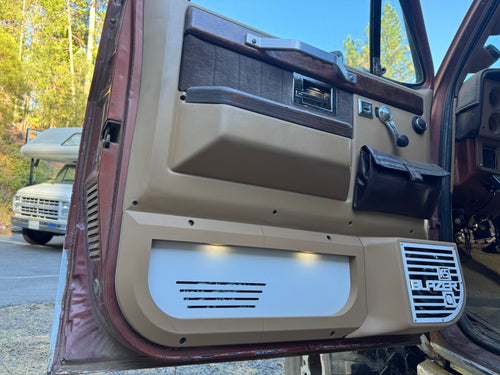
The smartest move is to start with a Squarebody-specific door speaker panel or mount designed around these trucks. That gives you a known speaker location and avoids the ugly "universal box screwed to a vintage door" look. It also saves time — you're building around something made for the platform instead of forcing a generic solution into a truck with its own quirks. The Blazin' Biddles Offroad Door Speaker Panels are built for 6.5" coaxials and give you that known-good starting point for 1973–1991 front doors.
Speaker size matters, but depth matters more. A shallower 6.5" speaker often fits better than a deeper speaker with bigger advertised output. If your truck sees road and trail, clean reliable sound beats chasing numbers that only work on a test bench. Sometimes the right answer isn't the biggest speaker that can almost fit — it's the speaker that fits correctly with room for movement and solid mounting. There's a full breakdown of this in our Squarebody speaker sizing guide.
Measure First, Then Choose the Speaker
If you're still shopping speakers, measure the available depth with the window fully down and the regulator in its tightest spot. Then compare that to the speaker's mounting depth and magnet diameter. Account for the front side too — some speakers have tall tweeter bridges or thick grille profiles that can contact the panel or your leg depending on placement.
This is where spacing comes in. A spacer can save a shallow clearance issue, but it also pushes the speaker outward, which can affect panel fit and appearance. A small spacer ring is common and useful. A giant stack of rings usually means the speaker choice is wrong for the truck. Material matters here too — ABS or HDPE spacers hold up better than cheap MDF if the truck sees weather, mud, or wet boots. Wood can work in a sealed interior truck, but in a real-use Squarebody, moisture resistance is worth paying attention to.
Panel Placement Matters More Than People Think
Where the speaker sits on the panel changes more than looks. It affects kick clearance, crank or handle clearance on some setups, and how the sound reaches you in the cab. Too low and it's vulnerable to scuffs and water. Too far forward or rearward and it can interfere with armrests, hardware, or door structure behind the panel.
A purpose-built panel takes a lot of that guesswork out — that's a big reason Squarebody owners lean toward truck-specific solutions instead of reinventing the wheel with a jigsaw and optimism. These trucks deserve parts built around actual fitment, not "close enough." If you are fabricating your own placement, mock everything up first. Hold the panel in place, check the back side, cycle the window, and make sure the speaker and grille will clear. Then do it again before drilling. Five extra minutes of checking beats buying another panel.
Wiring Door Speakers the Clean Way
A lot of old truck audio issues aren't speaker issues at all — they're wiring issues. Brittle factory wiring, poor grounds, and old connections make even good speakers sound weak or noisy. If you're fitting new door speakers, run fresh wire while the truck is apart.
Use a proper grommet or door boot where the wiring passes between the cab and the door. Don't just run wire through a raw hole and hope for the best. Doors move, metal edges cut insulation, and once the wire shorts you're back inside the truck chasing a problem you could've prevented. Keep the wire routed away from the window regulator and latch mechanism, and secure it so it can't flop around inside the door. That's one of those details nobody sees until the first time a loose wire gets grabbed by moving hardware.
If you're adding an amplifier, match your wiring plan to the power you're actually running. No benefit to overcomplicating a basic door speaker setup, but no reason to bottleneck good components with undersized wiring either. If you're building the whole system, we lay out the right order in how to upgrade Squarebody audio right.
Sealing and Deadening Help More Than Upgrading Twice
A speaker mounted to a flimsy, vibrating surface will never sound as good as the same speaker mounted solidly and sealed properly. Squarebody doors are old sheet metal — they resonate, flex, and let road noise straight into the cab. That's just reality.
Adding a butyl sound deadener kit and foam around the speaker can make a bigger difference than jumping to a more expensive speaker model. It tightens midbass, cuts rattles, and helps the speaker work against a controlled surface. You don't have to turn the whole door into a studio booth, but some strategic treatment goes a long way. Also check the door panel itself — if it's loose, warped, or missing clips, fix that while you're in there. A clean speaker install can still sound cheap if the panel buzzes every time the bass hits.
Common Mistakes When Fitting Door Speakers
The biggest mistake is cutting before measuring actual clearance. Right behind that is choosing speakers based on brand hype instead of fitment — Squarebody doors don't care what the box says. Another common miss is ignoring window travel. A speaker can look perfect with the window up, then get wiped out the first time you crank or power it down. Always test with full movement before final assembly.
People also underestimate grille clearance. Even if the speaker fits inside the door, the front face has to clear the panel and any trim. If the grille sticks out too far, it can snag clothing, get kicked, or just look wrong in an otherwise clean interior. Then there's the temptation to skip sealing and deadening because the install already took longer than expected. That's usually where the last 20 percent of effort gives you 50 percent of the result. If the door is open, it's the right time to do it.
Should You Cut Original Panels or Use Replacement Panels?
It depends on the truck. If you're building a driver, trail rig, or restomod that needs better audio and modern function, cutting or replacing panels makes sense. These trucks are meant to be used, and a clean speaker setup improves the cab every time you drive it.
If you have a highly original truck or rare trim package, preserving the factory panels may matter more. In that case, replacement panels or removable speaker solutions are the smarter route — you get the upgrade without permanently changing hard-to-find original interior parts. There's no single correct answer here. It depends on whether your truck is a survivor, a showpiece, or a machine that gets dirt on the floorboards and sees miles.
Final Fit Check Before You Button Up the Doors
Before the panel goes on for good, test everything. Roll the window up and down several times. Check latch operation. Confirm the speaker plays cleanly with no vibration from the mount, spacer, or panel. Make sure fasteners are snug but not crushing the panel material.
Once it's together, listen at low and medium volume first. A clean install should sound tight and stable, not like the door is arguing with the music. If something rattles now, fix it now — it won't get better on its own. A Squarebody always tells you when something was rushed. Take your time, fit the speakers like the truck matters, and you'll end up with a cab that sounds better every mile you put on it.
Frequently Asked Questions
How much clearance do I need for door speakers in a Squarebody?
Measure with the window fully down and the regulator in its tightest spot, from the mounting surface to the nearest obstruction. Don't trust catalog numbers — check the real depth behind your panel. A shallow-mount 6.5" often fits where a deeper speaker won't, even with the same cutout diameter.
Do I have to cut my door panels to fit speakers?
Not if you use a panel built for the truck. A Squarebody-specific door speaker panel gives you a known speaker location without hacking factory trim. If you're preserving a highly original truck, a replacement or removable panel gets you the upgrade without permanently altering rare interior parts.
Why do my door speakers rattle or sound muddy?
Usually it's the mounting surface, not the speaker. Bare Squarebody door metal flexes and resonates. Sound deadener and foam around the speaker tighten up the midbass and kill rattles, often making more difference than a pricier speaker. Also check for loose or missing panel clips.
What spacer material should I use for door speakers?
ABS or HDPE over MDF if the truck sees any weather, mud, or wet boots — wood swells and fails in a real-use door. Keep spacers minimal; a small ring solves a clearance issue, but a tall stack of rings means the speaker is the wrong depth for the truck.
How should I run the speaker wire into the door?
Through a proper grommet or door boot between the cab and door — never a raw hole. Route the wire clear of the window regulator and latch, and secure it so it can't flop into moving hardware. Run fresh wire while the door is apart; old brittle wiring causes more sound problems than people realize.
Need The Parts For This Build?
We carry everything mentioned in this guide — picked and backed by real Squarebody owners.
0 Comments
Leave a Comment