
Squarebody Audio Upgrades That Actually Work
Quick Takeaways
- Spend in order: wiring first, then front speakers and mounting, then door deadening, then power and bass. Fixing grounds and wiring costs almost nothing and makes everything you add later work better. Front speakers on a solid, truck-specific panel are the single biggest bang for your buck. Deaden the doors before buying better speakers — it usually does more for the same money. Skip the big touchscreen, exotic speaker brands, and giant sub boxes — spend on the foundation instead.
You don't need a rolling sound-competition build to make an old Chevy or GMC cab enjoyable again. Most Squarebody audio upgrades come down to fixing the same handful of problems every owner runs into — weak factory speaker locations, thin sheet metal, a noisy interior, hacked wiring, and modern head units that look out of place if you're not careful. Get those right and even a basic setup sounds dramatically better.
But most guys don't have unlimited money to throw at it, and they shouldn't have to. The real question isn't "what's the best system" — it's "where do I spend my money first so I actually hear the difference?" This article is about priority: what gives you the most improvement per dollar, what order to do it in, and where not to waste a cent. If you want the full step-by-step build with every component covered, that's how to upgrade Squarebody audio right. This one is about getting the most for the least.
Spend in This Order — It Matters More Than the Gear
Here's the thing most people get backwards: they buy the flashy stuff first (big speakers, a touchscreen) and skip the boring stuff (wiring, deadening). Then they wonder why it still sounds thin. The dollars go a lot further if you spend them in the order that actually fixes the sound.
The priority order for most Squarebodies is simple: fix the wiring foundation, upgrade the front speakers with solid mounting, deaden the doors, then add power and bass only if you still want more. Do it in that order and every dollar builds on the last one. Do it out of order and you end up paying twice.
Free and Cheap First: Fix What's Already Broken
Before you buy a single speaker, fix what's dragging down the sound you already have. This part costs almost nothing and makes everything you add later work better.
Old Squarebodies have usually seen decades of stereo swaps, alarm installs, CB radios, and mystery splices. Bad grounds, brittle connections, and undersized power wire quietly wreck an otherwise decent system. Chasing down a bad ground or re-running a corroded power wire costs a few bucks and a couple hours, and it's the highest-value thing you can do. A clean set of battery terminals and fresh power cable stop voltage-drop problems that make everything downstream sound weak. Tighten up loose door panel clips while you're at it — half the "bad speaker" complaints in these trucks are really a buzzing panel.
The Single Biggest Bang for Your Buck: Front Speakers Done Right
If you only upgrade one thing, make it the front speakers and the way they're mounted. This is where the money shows up most in these trucks.
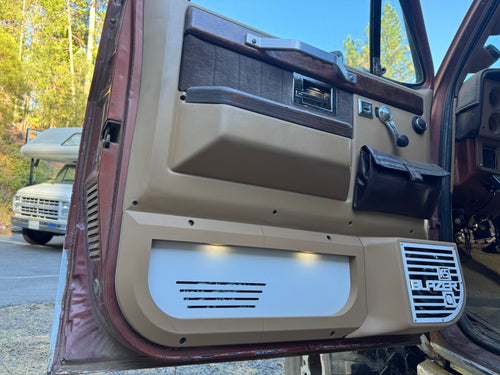
Factory locations were never good, and a lot of old trucks have already been cut up by previous owners cramming in whatever fit. A clean door panel solution gives you better speaker size options, better directionality, and stronger mounting — which translates to clearer vocals, better midrange, and less of that muddy, distant sound old truck stereos are known for. This is also where truck-specific parts beat universal ones every time. A panel built for a Squarebody fits the lines, clears the hardware, and doesn't look like an afterthought — and it lets you add 6.5" speakers without turning your doors into a sheet metal experiment.
You don't have to buy the most expensive speakers to get a big jump. A quality moderate-priced 6.5" coaxial in a solid, correct location outperforms an expensive speaker flopping in a flimsy panel. Mounting quality is doing half the work here, and mounting quality is cheap. If you're not sure what size fits your truck, check the Squarebody speaker sizing guide first so you don't buy twice.
Deaden the Doors Before You Buy Better Speakers
This is the upgrade people skip because it's not visible — and it's one of the smartest dollars in the whole process. A speaker mounted in a thin, resonant door will never sound as good as it should, no matter what you paid for it.
Here's the money math: a butyl sound deadener kit in the doors usually does more for your sound than spending the same money jumping up to a fancier speaker. It tightens midbass, kills rattles, and gives the speaker a solid surface to work against. You don't have to cover every inch of the cab — treat the doors first, then the back wall and a few key vibration points. If you're choosing between nicer speakers and deadening the doors you have, deaden the doors. It's the better buy.
Head Unit: Don't Overspend Here
The head unit sets the tone, but it's also where people blow budget they should've spent on speakers and deadening. For most Squarebody builds, a simple modern receiver with Bluetooth, clean preamp outputs, and straightforward controls is plenty. You want something easy to use with gloves, easy to see in daylight, and stable on rough roads.
That does not mean a huge touchscreen. A lot of Squarebody owners are better off skipping the oversized flashy units — they look out of place in an older dash, add theft risk, and get annoying in a truck that actually gets used. A clean single-DIN setup usually makes more sense, and it leaves money in the budget for the stuff that actually changes how the truck sounds. Looks matter, but not enough to justify weak output or a thinner wallet for the parts that count.
Power and Bass: Only When You're Ready for More
An amp and a sub are worth it — but they're the last stop, not the first. If your budget's tight, everything above comes first, because a clean front stage in a deadened door with good wiring already sounds night-and-day better than stock. Add power once you've got that handled and want more.
When you get there, you don't need a wild multi-amp setup. A compact four-channel amp for your main speakers wakes the whole system up — the cabin's noisy, and speakers sound better when they're not being pushed by a head unit running out of steam. For bass, don't get carried away. A compact 8" sub in a small box fills in the low end without eating your interior or storage. A trail truck, hunting rig, or shop truck needs room for gear more than it needs a giant box — giving up practical space for boom is usually a bad call unless the truck's built around audio from the start.
Where NOT to Waste Money
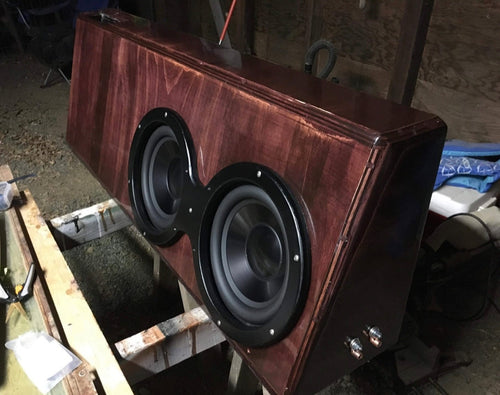
A few things people spend on that don't pay off in these trucks. Exotic speaker brands when the doors aren't deadened — you can't hear what you paid for over the rattle. Giant subwoofer boxes that eat the space you actually use for tools and gear. Oversized touchscreens that look wrong in the dash and get broken into. And chasing power-handling spec numbers on speakers when a modest, efficient speaker mounted correctly sounds better in a loud old cab anyway. Spend on the foundation, not the bragging rights.
Keep It Serviceable and Build for Your Truck
Whatever you spend, keep the install serviceable. Route wires cleanly, use proper connectors, protect the power wire, and leave yourself access. Nothing's worse than chasing an electrical issue later and finding a rat's nest from a stereo install done in a hurry. Use quality grounds, fuse the power correctly, and don't stack too many accessories onto tired original circuits — if the truck already runs lighting or other loads, think about the total system.
The best audio setup for a Squarebody is the one that fits the truck's job and your budget. A restored C10 cruiser can lean toward cleaner looks and balanced sound. A mud-running K5 needs durable panels and secure mounting that survive a rough weekend. Start with the weak links — wiring, mounting, placement, and noise control — then add gear as your budget allows. Do that, and your old Squarebody won't just be louder. It'll be a better truck to spend time in every time you fire it up, and you won't have wasted a dollar getting there.
Frequently Asked Questions
What's the cheapest way to make a big difference in Squarebody audio?
Fix your wiring and grounds first — it costs almost nothing and makes everything else work better. Then upgrade the front speakers with solid mounting and deaden the doors. That combination transforms the sound for a fraction of what people spend chasing expensive gear.
Should I buy better speakers or sound deadening first?
Deadening, in most cases. A butyl deadener kit in the doors usually does more for your sound than spending the same money on fancier speakers, because a speaker in an untreated door can't perform no matter what it cost. Deaden the doors you have, then upgrade speakers.
What order should I spend money in for a Squarebody stereo?
Wiring foundation first, then front speakers with proper mounting, then door deadening, then power and bass only if you want more. Spending in that order means every dollar builds on the last one instead of paying to fix the same problem twice.
Do I need an expensive head unit?
No. A simple modern single-DIN receiver with Bluetooth and clean preamp outputs is plenty for most builds. Skip the big touchscreen — it looks out of place in an old dash, invites theft, and eats budget better spent on speakers and deadening that actually change how the truck sounds.
Is a subwoofer worth it in a Squarebody?
Yes, but it's the last upgrade, not the first. A clean front stage in deadened doors already sounds far better than stock. When you're ready for more, a compact 8" sub in a small box adds low end without eating your storage — you don't need a giant box shaking the tailgate apart.
Need The Parts For This Build?
We carry everything mentioned in this guide — picked and backed by real Squarebody owners.
0 Comments
Leave a Comment