
How to Upgrade Squarebody Audio Right
Quick Takeaways
- Fix wiring and power first — bad grounds and splices cause more audio problems than weak speakers. Build in layers: wiring, then head unit, then speakers, then amp, then sub. Door speakers on truck-specific panels beat generic solutions on both fit and sound. Pick efficient, well-built speakers for a loud cab — coaxials are the practical choice for most builds. Sound deadening cuts the noise floor and tightens midbass more than most owners expect.
That old factory radio might still light up, but if your Squarebody sounds like a tin can full of static every time you hit a bump, it's time to fix it the right way. If you're figuring out how to upgrade Squarebody audio, the goal isn't just louder sound. It's cleaner sound, better fitment, and parts that make sense in a 1973–1991 Chevy or GMC that actually gets driven.
A lot of owners make the same mistake. They buy a modern head unit, grab whatever speakers are on sale, and hope the truck turns into a rolling concert hall. Then they find out the dash speaker sizes are weird, the old wiring is junk, the doors were never set up for decent audio, and road noise eats half the sound anyway. Squarebodies need a platform-specific plan, built in the right order.
If you're still deciding which speaker locations to use, start with our overview of the best Squarebody speaker upgrade options. This article is about the build itself — what to do first, second, and last so you don't wire the truck twice.
Start With What Your Truck Actually Has
Before you order a single part, look at the truck honestly. Is it still running the original radio opening? One dash speaker, dual dash speakers, kick panels, or hacked-in door speakers from some old install? Has anyone already cut the doors or run new wire? Those answers decide how clean your upgrade can be.
A mostly untouched truck gives you more choices if you want a factory-looking interior. A truck that's already been modified may be easier to build for sound quality — but you still need to check what was done and how well. Bad grounds, loose crimp connectors, and random speaker wire twisted together behind the dash are common in these trucks.
The best setup depends on how you use the rig. A trail truck with mud tires and no insulation needs a different approach than a clean cruiser with carpet, sound deadening, and sealed doors. If your truck is loud inside, dumping all your money into premium speakers without addressing noise is a bad trade.
Build It in Layers, Not All at Once
The smart way to build a Squarebody system is in layers. Start with the foundation, then improve the parts that matter most, in order.
First, deal with power and wiring. Old wiring causes more audio problems than most people realize. Weak grounds, brittle insulation, and hacked-in splices create noise, cut volume, and make troubleshooting miserable. If your wiring is questionable, replace it. Fresh speaker wire and proper power connections aren't glamorous, but they do more for reliability than any fancy component. If you're adding an amp, upgrade the power side too — clean tinned power cable and solid battery terminals stop voltage-drop problems before they start.
Next, choose your source unit. For most owners, that's a modern head unit with Bluetooth, hands-free calling, and decent preamp output. If you care about a stock look, retro-style options fit the vibe better than a flashy touchscreen. If this is a daily driver, ease of use matters — you want something you can operate with dirty hands, in sunlight, on rough roads, without stabbing at tiny menus.
Then focus on speaker placement. This is where a lot of Squarebody builds either come together or fall apart.
Speaker Placement Matters More Than People Think
Older trucks weren't designed around modern audio. You're working around limited space, simple interior panels, and speaker locations that aren't ideal by today's standards. You can still get very good sound — but placement and mounting are everything.
Dash speakers keep the install clean but rarely deliver full-range sound on their own. They're useful, but they shouldn't be expected to carry the whole system if you want depth and clarity. Door-mounted speakers usually give a much bigger improvement because they handle more midbass and create a fuller soundstage.
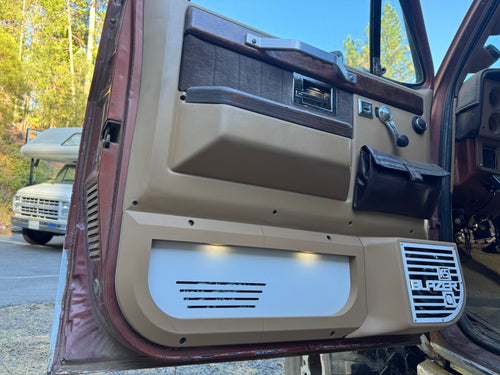
The catch is that generic door speaker solutions fit like generic door speaker solutions — they look out of place, interfere with panels or handles, or force awkward mounting angles. That's why truck-specific door speaker panels make a real difference. They solve a fitment problem and an audio problem at the same time, giving you stronger sound where the truck needs it without the cobbled-together look that ruins a lot of interiors. If you want the full breakdown on that route, we cover it in Squarebody door speaker panels that fit right.
Dash, Doors, or Both?
Simple answer: both usually works best. Use the dash for upper-range fill and the doors for your main output. That gives the truck a more balanced sound than relying on one location alone.
There are trade-offs. If you want to keep the truck close to factory with no visible changes, dash-only may be your limit. If you care more about sound quality than originality, door speakers are worth it. And if you're building a serious system, doors plus an amp and subwoofer will outperform everything else.
Pick Speakers for the Truck, Not the Box
Ignore the marketing and think about your actual cab. A single cab on mud tires with a V8 and wind noise is not a studio. You need speakers that stay clear at usable volume — not speakers that only sound good in a quiet showroom.
Sensitivity matters. In a loud old truck, efficient speakers make a noticeable difference, especially if you're not running a separate amp yet. Build quality matters too — cheap speakers with flimsy cones and weak baskets don't hold up in vehicles that see heat, vibration, dust, and occasional moisture.
Component speakers can sound excellent, but they add complexity with separate tweeters and crossovers. For a lot of Squarebody owners, a quality 6.5" coaxial speaker is the better call — simpler, easier to mount, and still solid results. If you're chasing top-end sound quality and don't mind custom work, components may be worth it. For most real-world builds, coaxials are the practical choice.
Do You Need an Amp?
Sometimes yes, sometimes no.
If you're replacing a dead radio and blown speakers, a decent head unit powering good speakers may be enough to make you happy — especially on a weekend cruiser. Modern head units are better than old factory stuff by a mile.
But if you want clean sound at speed, with the windows down, or over aggressive exhaust and tire noise, an amp helps a lot. More clean power beats turning a head unit up until it distorts. Even a compact four-channel amp wakes up a Squarebody system and gives your speakers the control they need.
This is an it-depends call. If budget's tight, start with speakers and wiring, then add an amp later. If you know from the start you want stronger output, build for it now so you don't redo wiring twice.
What About Bass?
A Squarebody with no low end always sounds thin. You don't need to go crazy, but some form of subwoofer fills in what door and dash speakers can't reproduce well.
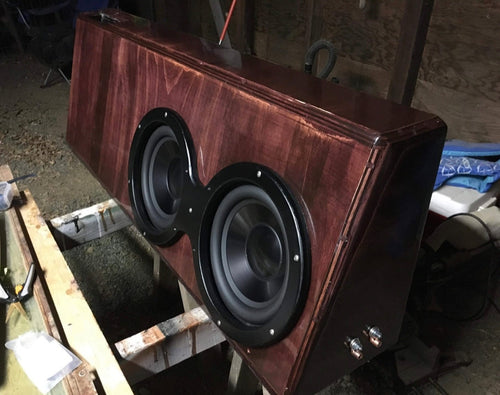
The challenge is space. Regular cab trucks don't give you much room, and you still want a usable interior. A compact sub or low-profile enclosure is often the best compromise — something like a DC Audio M4 8" sub in a tight box adds real low end without eating the back of the truck. Extended cab and Suburban owners have more flexibility, but fitment still matters if the truck hauls gear, tools, or family.
Don't build the system around bass alone. A sub should support the rest of the setup, not overpower it. In an old truck, balanced sound feels better than brute-force boom.
Don't Ignore Noise Control
If you really want better audio, reduce the noise floor inside the truck. That means addressing door resonance, cab vibration, and rattles before blaming the speakers. A butyl sound deadener kit in the doors and behind interior panels helps more than most owners expect. It tightens up midbass, cuts vibration, and makes the whole system sound more controlled.
This is also where a clean install separates a good build from a frustrating one. Solid speaker mounting, sealed surfaces where possible, and tight interior panels all help. Loose metal and worn-out clips will ruin good equipment fast.
Keep the Install Serviceable
One thing you learn fast working on these trucks is that clean installs are easier to live with later. Leave yourself access to wiring. Use proper connectors. Label things if the truck has multiple amps, accessories, or switched circuits. Mount components where they're protected but still reachable.
You may be the one servicing it later, or the next owner might be. Either way, don't turn the truck into an electrical guessing game.
If you want a setup that works in the real world, think like a truck owner, not a catalog shopper. Build around the cab, the noise level, and how you actually use the rig. A Squarebody audio upgrade doesn't need gimmicks. It needs good wiring, smart speaker placement, and parts that fit the truck like they belong there. That's how you end up with a stereo you can actually enjoy on the road, on the trail, or heading home covered in dust.
Frequently Asked Questions
What should I upgrade first in a Squarebody audio system?
Start with wiring and power. Old grounds, brittle insulation, and hacked-in splices cause more audio problems than weak speakers do. Fresh speaker wire and solid power connections come before the head unit, speakers, or amp — otherwise you'll be chasing noise and redoing work later.
Are dash speakers enough on their own?
Usually not. Dash speakers keep the install clean and add upper-range fill, but they can't carry a full-range system by themselves. Door-mounted speakers handle more midbass and create a fuller soundstage. For most trucks, dash plus doors gives the most balanced result.
Do I need an amplifier for a Squarebody stereo?
Not always. A good head unit and quality speakers can be plenty for a weekend cruiser. But if you want clean sound at highway speed, with the windows down, or over loud exhaust and mud tires, even a compact four-channel amp makes a big difference — more clean power beats cranking a head unit into distortion.
Coaxial or component speakers for a Squarebody?
Coaxials for most builds. They install easier, package better in tight spots, and give a real improvement without the extra tweeters and crossovers components require. Components are great for a high-end custom build, but coaxials are the practical, reliable choice for a daily-driven truck.
Does sound deadening really improve audio?
Yes. Bare metal doors and panels flex and ring, which muddies midbass and adds rattles no speaker upgrade can fix. A butyl deadener kit in the doors tightens up the low end, cuts vibration, and makes the whole system sound more controlled — on top of quieting the cab.
Need The Parts For This Build?
We carry everything mentioned in this guide — picked and backed by real Squarebody owners.
0 Comments
Leave a Comment