
Squarebody Speakers Versus Kick Panels
Quick Takeaways
- The door-vs-kick-panel call is about fit, legroom, and durability — not just sound quality. Kick panels keep the door clean but eat foot space and live in a rough, dusty lower-cab spot. Door speakers put sound near ear level and preserve foot room, but need solid mounting and sealing. Install quality decides the winner — deadening, sealing, and tuning matter more than location on paper. For hard-used trucks, door-mounted 6.5" speakers on a purpose-built panel are often the better real-world choice.
You notice it the first time you turn the stereo up in a Squarebody with the windows down. The truck sounds good, the small-block sounds better, and your music is fighting for third place. That's where the speakers-versus-kick-panels debate really starts — not on paper, but in a real cab with road noise, old sheet metal, and limited places to put anything.
For these trucks, audio upgrades are never just about sound quality. They're about fit, legroom, door function, install time, and whether the setup still makes sense after a muddy weekend, a long highway drive, or a full interior refresh. If you're deciding between speaker locations in your Squarebody, the right answer depends on how you use the truck and what trade-offs you're willing to live with. For the full picture on every location, start with the best Squarebody speaker upgrade options — this article zeroes in on the door-versus-kick-panel call specifically.
What You're Really Choosing
Most owners frame this like a straight audio question. It's not. You're really choosing where to place sound in a cab that was never designed around modern speakers.
Kick panel speakers mount low, forward, and usually out of the way of the door itself. Door-mounted speakers sit in or on the door panel and put the speaker closer to ear level, but they ask more from a door that's already doing a lot. Both can work. Both can also be annoying if they're installed without thinking through how the truck gets used. In a Squarebody, space is tight, factory layouts are dated, and every added part competes with something else — which is exactly why universal audio advice falls apart fast.
Why Kick Panels Appeal to Squarebody Owners
Kick panels became popular for a reason. They solve a packaging problem without forcing a speaker into the middle of the door.
The first advantage is cleaner door real estate. If you want to preserve the look of your door panels, avoid cutting original-style trim, or keep the door from carrying extra weight and wiring, kick panels move the speaker off the door and into a spot that can be easier to work with. There's also a staging benefit — even though kick panel speakers sit low, they often create a more balanced front sound than old single-speaker setups or poorly placed door speakers. With the right component set and tuning, they can image surprisingly well in a Squarebody cab.
They also dodge some door-related problems. Doors vibrate. Doors slam. Doors collect moisture. Doors have old regulators, aging seals, and sometimes rough inner structure after decades of use. Mounting speakers elsewhere can cut down on rattles and water headaches. That said, kick panels aren't automatically the better setup.
Where Kick Panels Can Cause Problems
The biggest issue is leg and foot space. In a truck with a roomy bench seat, that might not sound like a deal breaker — but once you're getting in and out with work boots, trail shoes, or a passenger who isn't careful, that lower front corner of the cab matters.
A kick panel speaker becomes one more thing to scuff, crack, or kick loose. In a rig that sees dirt, passengers, and gear, that location takes abuse. There's also exposure — that lower cab area catches dust, mud, and whatever comes off your boots. Good materials and grilles help, but kick panel speakers still live in a rough neighborhood. And installation can be a mixed bag: some kick panel solutions fit well, others feel adapted from something else and never truly belonged in a Squarebody. If the fit is off, the panel can interfere with parking brake use, trim, or weatherstripping, or just look awkward against the rest of the interior.
Why Door-Mounted Speakers Still Make Sense
Door speakers get dismissed too quickly sometimes, especially by people talking in broad audio terms instead of Squarebody terms. In the right truck, they're still a solid answer.
The biggest advantage is location. A speaker mounted in the door puts sound closer to the listener and often produces a more direct, lively feel in the cab. For everyday listening, that makes a bigger difference than people expect. Door solutions also preserve foot room — if you're tall, if your passengers are always climbing in with boots, or if your truck sees constant use, keeping the lower kick area clear is a practical move. That matters a lot in regular cab trucks where every inch around your feet gets used.
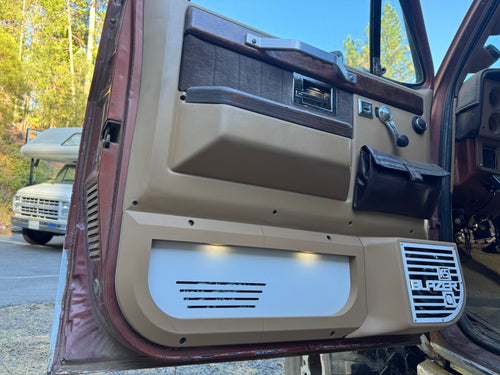
Then there's usability. A well-designed door speaker panel made specifically for a Squarebody looks more integrated than a universal setup and solves the sound problem without making the truck less comfortable. That's the key point — an audio upgrade shouldn't create a new annoyance just to fix an old one. For owners who want stronger front-stage sound without sacrificing cabin movement, a door-based setup is often the better real-world choice. The Blazin' Biddles panels are built for 6.5" coaxials and drop into 1973–1991 front doors without hacking up the interior; the full rundown is in Squarebody door speaker panels that fit right.
The Downsides of Door Speakers
Doors are harsh places for speakers. They get moisture inside them, they vibrate, they flex. If the mount and panel are weak, you'll hear it — buzzes, rattles, and muddy midbass are common when the install is half-done. There's also the question of cutting or modifying panels; if your truck has clean original-style interior pieces, you may not want to alter them, which is fair on cleaner restorations or trucks with harder-to-replace trim.
Weight and wiring matter too. Running speaker wire into old doors means dealing with door jamb routing, protection from pinching, and making sure everything survives years of opening and closing. None of that is impossible, but it has to be done right. And if the speaker or grille sticks out too far, you can create clearance issues with knees, arm movement, or door pocket use. Bad design turns a good idea into a part you get annoyed with every time you drive.
Which Setup Sounds Better?
The honest answer is that it depends more on execution than theory. A high-quality speaker in a poorly mounted door will sound worse than a modest speaker in a well-built kick panel. The opposite is also true. Sound deadening, sealing, amplifier quality, crossover setup, and speaker angle all matter. In these old trucks, install quality usually decides the winner.
Kick panels can create a nice front image when they're aimed well and paired with proper components. Door speakers can sound fuller and more direct when the mounting surface is solid and the door is treated correctly. Either way, a butyl sound deadener kit in the mounting location does more for the final result than most people expect. There's no universal knockout winner — if your goal is pure sound quality and you're willing to tune carefully, either setup can work.
How to Choose for Your Truck
If your Squarebody is a weekend cruiser, show truck, or fair-weather build where interior looks matter as much as function, kick panels may be the cleaner choice. They preserve the door panel look and still give you a proper front speaker location.
If your truck gets used hard, sees off-road time, or hauls passengers regularly, door-mounted speakers often make more sense. Keeping the kick area open is a real advantage when people are climbing in and out with dirty boots and no concern for your interior parts. If you're tall or drive the truck often, think hard about cabin ergonomics before you decide — a speaker that sounds great for ten minutes but crowds your left foot every day isn't an upgrade, it's a compromise you'll keep noticing.
And if originality matters, look at how much modification each option requires. Some owners would rather change a replaceable panel than cut into harder-to-find trim. Others would rather use a purpose-built door panel that looks right and fits the truck better than a generic audio piece ever will. That's really the whole deal — the best answer isn't the one that wins a forum argument. It's the one that fits your build, your interior, and the way you actually use the truck.
Frequently Asked Questions
Do kick panels or door speakers sound better in a Squarebody?
It comes down to install quality more than location. A good speaker in a poorly mounted door sounds worse than a modest one in a well-built kick panel, and vice versa. Sound deadening, solid mounting, and proper tuning decide the winner in these old trucks — not the location on paper.
Do kick panel speakers get in the way of your feet?
They can, especially in regular cab trucks or if you're tall. That lower front corner takes abuse from boots, passengers, and gear, and the speaker there can get scuffed or kicked loose. If you use the truck hard, keeping the kick area clear with door-mounted speakers is often the more practical move.
Are door speakers bad because of moisture and vibration?
Doors are a harsher environment, but a properly built and sealed install handles it fine. The problems — rattles, muddy midbass — come from half-done installs. A purpose-built door panel plus sound deadener solves the vibration issue and keeps the setup clean.
Which is easier to install in a Squarebody?
Both take real work. Kick panels avoid door wiring but can fight the parking brake, trim, or weatherstripping if the fit is off. Door speakers need clean jamb wire routing and solid mounting. A panel built specifically for the truck makes the door route more straightforward than a universal pod.
What size speakers work for these locations?
6.5" is the common sweet spot for both doors and many kick setups. The Blazin' Biddles door panels are built specifically for 6.5" coaxials. Whatever location you pick, measure mounting depth and check clearance before buying — depth trips up more installs than diameter does.
Need The Parts For This Build?
We carry everything mentioned in this guide — picked and backed by real Squarebody owners.
0 Comments
Leave a Comment