
Squarebody Door Speaker Panels That Fit Right
Quick Takeaways
- Factory speaker locations are small and poorly placed — door panels move sound closer to the listener. Purpose-built panels beat universal parts on fit, mounting strength, and clearance. These panels are built for 6.5" coaxial speakers and install with six screws and one wire hole — no giant door cutting. They fit all 1973–1991 Squarebody trucks, Blazers, and Suburbans, front doors only, and look best on '78 and up. Three build tiers — Base, Premium, and Fully Loaded — so the panel matches how far you're taking the truck.
If you've ever tried improving the stereo in an old truck, you already know the usual problems. Factory speaker locations are small. Sound feels weak. Universal audio parts rarely fit the way they should. And too many upgrades end with cut-up doors and an interior that looks worse instead of better.
That's exactly why a proper Squarebody door speaker panel makes so much sense. It solves a real problem, and it does it in a way that improves both sound and interior at the same time — without hacking giant holes in your doors. For most 1973–1991 Chevy and GMC owners, that's the kind of upgrade they actually want. Not flashy. Not complicated. Just something that works, fits right, and improves the truck every time they drive it.
If you're weighing all your speaker options first — dash, kick panels, behind-the-seat, doors — start with our full breakdown on the best Squarebody speaker upgrade options. This article digs into the door panel route specifically.
Why Factory Speaker Locations Fall Short
When these trucks were built, audio was simple. The factory systems were fine for the time, but expectations have changed. Roads are louder. Tires are bigger. Exhaust often isn't stock anymore. And a lot of owners use these trucks for way more than short drives around town.
Take a Squarebody on the highway, a long road trip, or a trail ride, and weak speaker placement gets obvious fast. You turn up the volume and still can't hear detail. Vocals sound far away. Low end feels thin. Even decent speakers underperform when they're mounted in a bad spot.
That's where door-mounted speakers make a real difference. They move the sound closer to you, open up better speaker choices, and let modern components work the way they're supposed to. Good lower door speaker panels make that possible without leaning on universal parts that were never designed around these trucks.
Why Purpose-Built Panels Beat Universal Panels
Universal parts promise flexibility. But flexibility usually means compromise — especially in old trucks where space is tight and factory layouts were never built for aftermarket audio.
Purpose-built panels solve that. They're designed around the truck, not forced onto it. That shows up in three areas.
1. Better Shape and Interior Fit
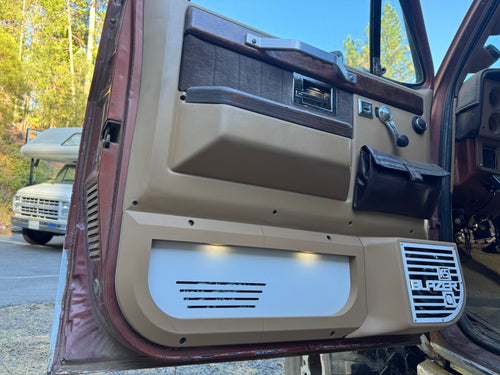
A good speaker panel should look like it belongs there. It should follow the lines of the door and work with the interior instead of fighting it. When a panel looks natural, the whole interior feels more finished. That matters — especially in older trucks where every visible modification stands out. The Blazin' Biddles Offroad Door Speaker Panels are color-matched to your interior on the Premium and Fully Loaded builds and look best on '78-and-up trucks, where they line up with the door body lines.
2. Better Mounting Strength
Speakers create vibration. So do rough roads. So do heavy doors closing thousands of times. If a panel is weak or poorly mounted, noise follows — buzzing, rattles, movement. That's why construction matters. These panels are solid PETG-HF, not thin sheet metal that warps or rusts, with all stainless hardware and acoustic foam plus sound deadener built into the chamber on the Premium and Fully Loaded tiers. No rattles.
3. Better Clearance
Old doors have a lot going on inside — window mechanisms, handles, armrests, door pulls, weatherstripping, inner structure. All of it competes for room. A proper panel respects those limits. That's one of the biggest differences between a generic part and a vehicle-specific one. These replace the factory carpeted panel below your door panel — an add-on that works around the door's guts instead of fighting them.
Why Fitment Matters More Than People Think
A lot of people focus on speakers first — brand, size, power handling. Those matter. But fitment matters first, because if the mounting is poor, none of the rest matters much.
This is also where people forget that "Squarebody" covers a lot of trucks — pickups, K5 Blazers, Jimmys, Suburbans. They share a lot, but not every interior is identical. And a lot of these trucks have been modified over the years: previous repairs, recovered panels, changed armrests, different hardware. All of it affects install details. That's why platform-specific parts matter — they account for those realities better than generic solutions. These fit regular, extended, and crew cab, and work with factory or rewrapped doors (a full custom interior may not be compatible).
Choosing the Right Speaker Size
One mistake people make is assuming bigger speakers automatically mean better sound. Not always true. Balance matters. A properly matched speaker often sounds better than a larger one forced into a setup it was never meant for.
These panels are built for 6.5" coaxial speakers with no tweeter cutouts — a size that fits the doors cleanly and sounds great for the majority of builds. You can run your own 6.5s or add a set when you order. If you're building a bigger system, adding proper power from a DC Audio amplifier often does more for performance than chasing a larger speaker. Power, tuning, and efficiency all matter as much as size.
And speaker depth gets overlooked constantly. A speaker can fit the opening and still not clear what's behind it. Measure first. That one step prevents expensive mistakes.
Installation Can Make or Break the Upgrade
Even quality parts need a good install. Start with the basics — check the door itself. Loose clips? Fix them. Broken panel mounts? Address them. Missing hardware? Replace it. A lot of rattles blamed on speakers actually start elsewhere.
The good news on these panels is the install is straightforward. No giant speaker holes hacked into your doors — it's six self-tapping screws (or drill and rivnuts) and one wire pass-through hole. Most installs run 3–5 hours with a drill, a few bits, and a Phillips. You should be handy with basic wiring and have a wiring diagram for your truck. Every set also comes with direct install support from a master tech — you get the direct line of the guy who designed them, by text or video, not a help desk.
And while the door is apart, consider sound deadening. You don't have to overdo it, but even modest treatment in the right areas cuts vibration and improves speaker performance. A butyl sound deadener kit handles that. On the Premium and Fully Loaded panels, deadener and foam are already built into the panel chamber.
Different Builds Need Different Solutions
Not every Squarebody has the same goals. Some owners want a simple, clean speaker upgrade. Some want a more finished interior. Some want lighting, upgraded wiring, and more integrated features. That's why options matter.
These panels come in three tiers so the part fits the build. The Base is raw aluminum and black — a clean, durable foundation you run your own 6.5s in. The Premium adds color-matching, three-light ambient lighting that comes on with your door, and the built-in sound deadening. The Fully Loaded comes polished or powder-coated with a custom grille and DC Audio Pro speakers already installed, assembled and ready to bolt in. Same core panel, finished to match how far you're taking the truck.
Why Owner-Built Products Make More Sense
There's a difference between catalog parts and parts built by someone who understands the platform. Squarebody owners notice it — because they care about the details. How something fits. How it ages. How it behaves after years of use.
That's the whole reason these panels exist. In the words on the product page: I built these because I wanted them on my own truck and nobody made them. It wasn't a catalog part or a universal pod hacked onto a door — it was the panel I wished existed, so I built it, ran it in my own rigs through real heat and cold for over a year, and then built it for other people's trucks. That perspective is the difference between guessing at a problem and solving one you actually live with.
Are Squarebody Door Speaker Panels Worth It?
For a lot of trucks, yes. If you want better sound, cleaner fitment, and an interior upgrade that feels natural in the truck, they make a lot of sense. You notice the improvement every time you drive.
And unlike modifications that feel exciting for a week and then fade into the background, interior upgrades keep paying off. You use them every trip. You hear them every trip. You see them every trip. That matters — especially in a truck you plan to keep.
That's what most Squarebody owners are really building. Not disposable projects. Long-term trucks. Buy once. Choose parts that fit, hold up, and solve a problem instead of adding new ones. That's where good door speaker panels earn their place. They're not just somewhere to mount speakers — they're a cleaner answer to an old-truck problem.
Frequently Asked Questions
What speaker size do the door panels fit?
The panels are built for 6.5" coaxial speakers with no tweeter cutouts. You can run your own 6.5s or add a set when you order — Sky High or DC Audio Pro coaxials. They work with any head unit or amp.
Do I have to cut big holes in my doors to install them?
No. These replace the factory carpeted panel below your door panel and install with six self-tapping screws (or drill and rivnuts) plus one wire pass-through hole. No giant speaker holes hacked into the doors. Most installs run 3–5 hours.
What years and cabs do they fit?
They fit all 1973–1991 Squarebody Chevy and GMC trucks, Blazers, and Suburbans — front doors only, in regular, extended, and crew cab. They look best on '78-and-up trucks, where they match the door body lines. They work with factory or rewrapped doors, though a full custom interior may not be compatible.
What's the difference between the Base, Premium, and Fully Loaded panels?
Base is raw aluminum and black with no lighting — run your own 6.5s. Premium adds color-matching to your interior, three-light ambient door lighting, and built-in sound deadener with wiring included. Fully Loaded comes polished or powder-coated with a custom grille and DC Audio Pro speakers already installed, ready to bolt in.
Are they color-matched to my truck?
Premium and Fully Loaded panels are color-matched to your interior — any factory color from 1973–1987, or whatever you have in mind. You confirm your exact color and grille directly before anything gets built, so it comes out right. Base panels come in black with raw aluminum.
Need The Parts For This Build?
We carry everything mentioned in this guide — picked and backed by real Squarebody owners.
0 Comments
Leave a Comment