
What Fits Squarebody Door Openings? Fitment Help
A Squarebody door is not a blank canvas just because it looks flat. If you are asking what fits squarebody door openings, first pin down which opening you mean. The cab-side door opening, the factory door panel, the lower door area, and a cutout left by a previous owner are all different things. Treating them like the same measurement is how good parts get ordered wrong and original panels get cut up for no reason.
For most owners, this question comes up while planning speakers, replacing door panels, or chasing parts for a truck that has been apart before. The right answer depends on the truck's body style, year range, and whether you are trying to retain factory-looking interior pieces or build something custom.
Start With the Actual Door Opening
On a 1973-1987 Chevy or GMC conventional-cab pickup, the front doors and cab opening are part of the Squarebody architecture people know best. The 1988-1991 R/V pickups continued that basic Squarebody cab family, so do not assume a part is wrong simply because the registration says 1990. At the same time, never buy based on a broad "73-91" label alone. Sellers use that range loosely, and the truck body matters.
K5 Blazers, GMC Jimmys, and Suburbans have their own body configurations. A Blazer or Jimmy has front doors plus removable-top or full-top body details depending on year and model. A Suburban adds rear doors, and those rear doors are not just extra front doors. Door length, inner structure, glass, trim, seals, panels, and hardware can all change what belongs there.
If you mean the opening in the cab where the whole door closes, replacement doors need to match the vehicle's body configuration. If you mean the opening in the interior panel where a speaker or accessory goes, the outer door shell is only part of the fitment story. The panel, window mechanism, armrest, wiring path, and speaker depth matter just as much.
What Fits Squarebody Door Openings for Speakers?
This is usually the real question. Squarebody trucks were not designed around big modern door speakers. Many original door panels have no useful factory speaker location at all, while others have been modified over the last 40-plus years. You may find a clean original panel, a panel with a small cutout, or a giant hole somebody made with a drywall saw in 1994.
A 6.5-inch speaker is a common choice because it gives you good sound without demanding a huge enclosure. But "6.5-inch" describes the nominal speaker size, not a guaranteed fit in every location. The mounting-hole pattern, basket diameter, magnet depth, window track clearance, and panel shape still need to work together.
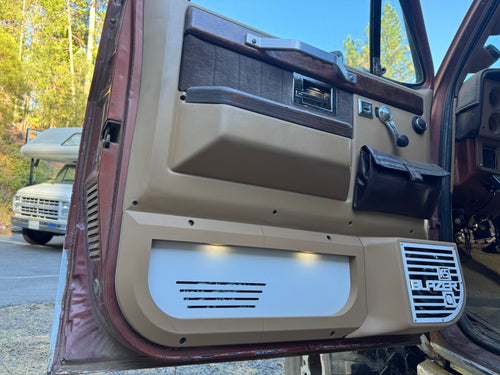
The lower front-door area is often the best place for a speaker panel because it can put sound in the cab without cutting the upper factory panel. That is the whole point of a purpose-built panel. It should follow the shape of the Squarebody door, mount securely, clear the moving window hardware, and leave the original door panel alone.
That is why a universal speaker pod is rarely the easy answer. It may technically hold a speaker, but it can sit crooked, interfere with the armrest or door pull, leave gaps, or require fresh holes in a door you wanted to keep clean. Universal parts are fine when you are building a full custom interior and are ready to modify things. They are not the first choice for an owner trying to improve the truck without making it harder to restore later.
Your Truck's Door Panel Matters as Much as the Door
Before ordering anything for a Squarebody door, pull the panel or at least inspect behind it. Look for previous modifications, missing clips, moisture damage, loose window tracks, and wires that have been run through the door without protection. Old trucks tend to tell on their previous owners once the panel comes off.
Pay attention to three areas. First, check the lower door metal for clearance behind the proposed speaker location. A deep magnet can contact window hardware or glass when the window comes down. Second, check the panel itself. A warped or damaged factory panel may not sit correctly against an add-on piece. Third, check how the wiring will cross from the cab into the door. Speaker wire needs enough slack for the door to open fully, but it should not hang where it can pinch or rub through.
If the truck has power locks, power windows, aftermarket alarm wiring, or a previous audio system, take an extra minute here. The space inside a Squarebody door gets crowded fast when wires have been added over the years.
Measure Before You Cut
If you are building a custom setup, measure the available flat area, then measure from the door metal to the moving window components with the glass both up and down. Do not check it only with the window closed. The speaker may clear when the truck is parked and hit the regulator the first time you roll the window down.
Also measure the speaker's actual mounting depth and outside diameter from its spec sheet. Two speakers sold as 6.5-inch models can have noticeably different baskets and magnet sizes. A shallow-mount speaker may fit where a deeper one will not.
When you are preserving original door panels, cutting should be the last step, not the first. Mock up the speaker, grille, and mounting location with the panel installed. Make sure the door still closes, the armrest is usable, and your foot will not catch the speaker grille climbing in and out of the truck.
Door Fitment Changes With Body Style
A regular-cab pickup, a crew cab, a Blazer, a Jimmy, and a Suburban may all wear Squarebody sheet metal, but that does not make every door-related part interchangeable. The front-door area can look similar at a glance, while the details that determine fit are different.
For pickups, verify whether you have the conventional 1973-1987 cab or an 1988-1991 R/V truck using the carryover Squarebody cab. For utilities, verify the specific body style and year before buying seals, panels, glass hardware, or interior trim. Suburban rear-door parts deserve their own fitment check every time.
Do not use trim level as your only guide, either. A truck may have been re-paneled, converted from manual to power accessories, or fitted with interior parts from another year. The VIN and build details are useful, but what is physically on the truck still wins when you are planning an install.
A Clean Audio Upgrade Without Hacking the Truck
The cleanest approach is to use a Squarebody-specific lower door speaker panel built around the 6.5-inch speaker size. It gives you a dedicated mounting location and can keep the factory door panel intact. That matters whether your truck is a workhorse, a trail rig, a clean cruiser, or a show build you have spent years putting together.
At Blazin' Biddles Off-Road, our lower door speaker panels are built specifically to solve that problem. They are made for Squarebody doors, not adapted from a generic pod, and are designed around adding 6.5-inch speakers without cutting up factory door panels. Color-matched and lighted options are available for owners who want the install to look finished instead of added on.
A speaker panel is only one part of the job, though. Sound deadener on the door skin can cut down on rattles and make the door feel more solid. Proper speaker wiring and secure mounting help prevent the buzzes and loose connections that make an otherwise good system sound cheap. If you are putting real power to the speakers, plan the amplifier and wire routing before you button the doors back up.
Common Mistakes When Fitting Squarebody Door Parts
The first mistake is trusting a year range without checking body style. The second is assuming all 6.5-inch speakers have the same depth. The third is cutting a clean original panel before checking whether a no-cut option exists.
Another common issue is mounting a speaker too low or too far forward. It may fit on paper but get kicked getting in and out, catch a boot, or make the door pocket and armrest harder to use. A good installation is not just about making the part fit. It needs to work with the truck every time you drive it.
Finally, do not ignore the door's condition. Bad hinge bushings, loose window hardware, missing vapor barriers, and rattling rods will not disappear because you installed a nice speaker. Fix what you can access while the panel is off. It is easier now than after the new equipment is installed.
A Squarebody deserves parts that fit the truck you actually own, not the listing title somebody wrote. Check the body style, inspect the door, measure the real space, and keep original panels intact when you can. That little bit of patience is what turns an upgrade into something you will still be proud of every time you shut the door.
Need The Parts For This Build?
We carry everything mentioned in this guide — picked and backed by real Squarebody owners.
0 Comments
Leave a Comment