
Squarebody Off-Road Prep Guide
Quick Takeaways
- Start with the baseline — frame cracks, body mounts, driveline, and cooling — before any upgrades. Match suspension to real use; useful travel and good geometry beat maximum lift. Steering and brakes come before more capability — bigger tires reduce braking and stress the frame near the steering box. Armor and recovery should be useful, not just heavy — secure recovery points matter more than looks. Sort wiring, fuel delivery, and secure interior storage, then shake the truck down locally before the real trip.
A Squarebody can look ready for the trail and still let you down before lunch. That's usually how it goes with old Chevy and GMC trucks — the stance looks right, the tires are big, maybe it even has a lift, but the first hard climb exposes weak steering, cooked brakes, loose wiring, and a cab that turns every tool and drink into a floorboard projectile. Real off-road prep starts with function, not flex.
The good news is these trucks are simple, tough, and worth building correctly. The bad news is age catches every system eventually. If you want a 1973–1991 pickup, K5, Jimmy, or Suburban to work off pavement with confidence, prep has to be honest — fix what's old, upgrade what's known to struggle, and choose parts that solve Squarebody-specific problems instead of universal parts that almost fit.
Start With the Baseline Before Any Upgrades
Before you order suspension, bumpers, or bigger tires, get underneath the truck and look at it like a machine you plan to trust miles from pavement. A lot of off-road problems are really deferred maintenance wearing a cool set of wheels.
Check the frame for cracks, especially around the steering box, spring hangers, and any old weld repairs. Look hard at body mounts too — a sloppy body mount makes the whole truck feel worse than it is. Then move to driveline basics: u-joints, carrier bearings on two-piece shafts, pinion seals, transmission leaks, transfer case output seals, and axle vent lines. None of it is glamorous, but all of it matters more than fancy accessories when you're far from the trailer.
Cooling is another place old trucks get exposed fast. Slow-speed crawling, summer trail rides, and bigger tires put extra load on the engine and transmission. If your radiator is half plugged, the fan clutch is weak, or the shroud is missing, fix that first. Off-road reliability starts with temperature control.
Suspension Should Match How You Actually Use the Truck
A lot of Squarebodies get overbuilt for parking-lot bragging rights and underbuilt for real trail use. The goal isn't maximum lift. It's useful travel, stable handling, and enough clearance to run the tire size you want without making the truck miserable on the road.
If your truck sees forest roads, mild rock, hunting property, and weekend cruising, a moderate setup usually makes more sense than a sky-high one. It keeps the center of gravity manageable, helps driveshaft angles, and reduces the domino effect of parts needed just to correct what the lift changed. Taller isn't always more capable — there's a full breakdown in best lift for Squarebody 4x4 trucks. Spring quality matters too. Cheap leaf packs ride like lumber and still sag after a season, and the right spring rate depends on your truck's real weight — a small-block short-bed needs something different than a loaded Suburban with bumpers, winch, gear, and a family inside.
If you want to gain articulation and correct geometry without a giant lift, a CFMi Zero Lift Shackle Flip Kit is one of the cleanest ways to do it on a truck you still drive on the street. For builds chasing better ride and travel, CFMi Adjustable Front Leaf Spring Hangers let you dial in axle position properly instead of fighting it. Whatever you run, think through the supporting pieces at the same time — brake line length, steering geometry, driveshaft travel, bump stops, and shackle condition all belong in the plan. This is where a lot of builds get sloppy: money goes into the visible parts while the correction parts get ignored. If you're sorting the whole setup, how to pick a Squarebody suspension kit walks through what actually goes into a good one.
Steering and Brakes Are Not Optional
Squarebody steering is one of the first systems to expose itself on rough ground. Larger tires, old bushings, flexy factory components, and frame stress near the steering box all stack up. If the truck wanders on road or jerks through the wheel off road, fix it before chasing any more capability.
Start with the basics: tie rods, drag link, rag joint, steering shaft play, box condition, and front spring eye bushings. Then inspect the frame around the steering box carefully — reinforcement makes sense on trucks that see hard use, especially with larger tires and a locked front end. A cracked frame here isn't rare, and it won't get better on its own. Brakes deserve the same honesty. Bigger tires effectively reduce braking performance, and old brake systems weren't stellar to begin with. If your pedal is soft, the truck pulls, or the rear drums are doing almost nothing, trail prep needs to pause. Fresh hoses, solid hard lines, quality pads and shoes, properly adjusted rears, and a healthy master cylinder go a long way. For most builds, better braking confidence beats one more inch of lift every single time.
Tire Size Is a Strategy, Not a Personality Trait
Everybody likes a good tire stance. The problem is tire size changes everything — gearing, steering effort, braking, axle stress, fender clearance, and how the truck feels in every situation.
A tire that works well on one Squarebody can be wrong for another. A light trail K5 with decent gearing might be happy on a larger tire than a heavy Suburban with stock gears and a tired automatic. Go too big without supporting changes and the truck becomes slower, harder to stop, and less enjoyable everywhere. Be honest about terrain, too — mud, desert, rocks, snow, and mixed-use backroads all reward different tread and sidewall construction. There's no perfect tire; more aggressive usually means louder on pavement and rougher in rain, so a balanced all-terrain is often smarter for a truck that still sees street miles. Our tire size comparison breaks down what each size actually costs you.
Armor and Recovery Should Protect the Truck, Not Just Decorate It
A good bumper, sliders, skid protection, and recovery points make sense when they're built around real use. The keyword is useful. If a bumper kills approach angle, hangs low, or adds a pile of weight without giving you better recovery options, it isn't helping much. Front and rear recovery points need to be secure and easy to reach — plenty of old builds still rely on sketchy tow-ball logic and hope. If you wheel with friends, you'll eventually recover somebody or get recovered yourself. Build for that day before it arrives.
For K5 Blazer and GMC Jimmy builds, the CFMi Rear Winch Bumper gives you full coverage and a proper recovery setup without leaving the rear exposed. Up front, the CFMi Front Winch Cradle keeps approach angle clean while giving you a real winch mount, with optional wings if you want more coverage. And a HD Gas Tank Skid Plate is one of those things you don't think about until the first time you drag the tank on a rock — at which point it's too late. Weight is the trade-off. Armor, winches, tire carriers, and steel everything add up fast, and Squarebodies aren't immune to becoming pigs. Protect the truck where it counts, but don't bolt on steel just because it looks tough. There's more on choosing a bumper in choosing a Squarebody off-road bumper, and on the gear itself in Squarebody recovery gear.
Wiring, Lighting, and Fuel Delivery Need Attention
Trail abuse exposes brittle wiring in a hurry. Heat, age, cheap repairs from three owners ago, and bad grounds are already working against you. Add vibration and weather, and electrical gremlins show up right when the sun drops. Clean up the charging system, battery cables, grounds, and fuse protection before adding lights or accessories, and route wiring away from heat and sharp edges. If the truck has mystery splices under the dash or in the engine bay, now's the time to fix them. A clean set of aluminum battery terminals and proper tinned OFC power cable will outlast the crusty factory stuff and prevent a lot of voltage-drop problems before they start.
Lighting upgrades are worth it if they're aimed well and powered correctly — good forward lighting helps on backroads and camp exits, but wiring quality matters more than raw brightness. Getting that part right is covered in how to wire Squarebody auxiliary lights right. The same honesty goes for fuel delivery — carbureted trucks need clean filters, healthy lines, and no vacuum-leak nonsense. If your engine stumbles on angles or starves on climbs, address that before your next trip.
The Interior Matters More Off Road Than People Think
This is the part a lot of builders treat like an afterthought, and it's exactly where real-world comfort and control come from. Squarebody interiors were never designed around modern trail use. Cup holders are weak or nonexistent, storage is limited, and loose gear ends up everywhere once the truck starts bouncing.
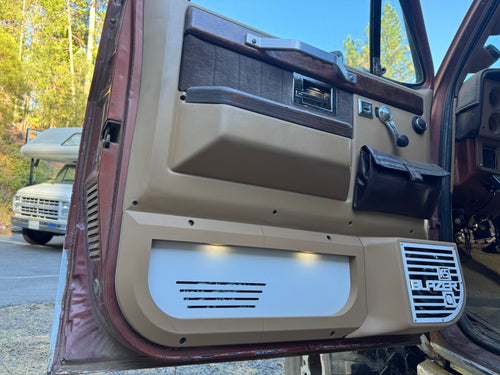
A smart interior setup solves real problems. Secure places for drinks, radios, trail maps, phones, and small tools make the truck easier to live with all day. A solid console setup keeps the cab from turning into a junk drawer every time the trail gets rough. That's why platform-specific interior parts matter — the Console Combo raises the factory console to a usable height and replaces the factory cup holders with adjustable ones that actually hold a tumbler. It's a bolt-in that reuses the factory brackets, no drilling, though the cup holders do require trimming the console opening to fit the larger holders. For audio and cab insulation, platform-specific door speaker panels and a butyl sound deadener kit cut road noise, exhaust drone, and cab heat in a way that genuinely changes how the truck feels on a long day. There's a full interior walkthrough in how to modernize your Squarebody's interior.
Pack for the Weak Points Your Truck Still Has
Even a well-prepped Squarebody is still an old truck. The smart move is to carry parts and tools based on your truck's history and current setup. If it likes to eat ignition parts, carry them. If the cooling system has been sorted but the power steering still sweats, pack fluid and keep an eye on it. A basic trail loadout should cover tire repair, recovery, hand tools, fluids, and a few failure items specific to your engine and drivetrain. The trick isn't hauling your whole garage — it's knowing what your truck is most likely to ask for and being ready when it does.
Test It Before the Real Trip
The worst place to discover rubbing, overheating, fuel starvation, or a bad vibration is two hours into a trail day. Shake the truck down locally first. Drive it on rough roads. Cycle the suspension. Load it with the gear you actually plan to carry. Then come back and tighten, trim, adjust, and improve.
That last 10 percent of prep is where a lot of confidence comes from — not because the truck is perfect, but because you know how it behaves, what it needs, and what's already been fixed. Build your Squarebody for the way you use it, not for somebody else's photo. That's the kind of prep that keeps you on the trail instead of under the truck.
Frequently Asked Questions
What should I do first to prep a Squarebody for off-road?
Start with the baseline, not the upgrades. Check the frame for cracks around the steering box and spring hangers, inspect body mounts and driveline parts, and sort the cooling system. Most off-road failures on these trucks are deferred maintenance, not missing accessories. Fix what's worn before you add lift, tires, or armor.
How much lift does a Squarebody need for the trail?
Usually less than people think. For forest roads, mild rock, and mixed use, a moderate lift with useful travel and good geometry beats a sky-high setup that hurts the center of gravity and creates a domino effect of correction parts. Match the lift to the tire size you actually want and how you really use the truck.
Do bigger tires hurt off-road reliability?
They can if the rest of the truck isn't ready. Bigger tires reduce braking, add steering effort, stress axles, and can crack frames near the steering box on hard-used trucks. They're worth it when you've sorted brakes, steering, and gearing to match — not as a bolt-on for stance alone.
What interior prep actually matters off-road?
Securing your gear. Loose drinks, tools, radios, and phones become projectiles the moment the trail gets rough. A solid console with real cup holders and defined storage keeps the cab usable all day. It's not an afterthought — it's part of controlling the truck instead of chasing junk around the floor.
What should I carry on the trail in a Squarebody?
Tailor it to your truck's known weak points, plus the basics: tire repair, recovery gear, hand tools, and fluids. Add a few failure items specific to your engine and drivetrain — if your truck eats a certain part, carry a spare. The goal is being ready for what your truck is most likely to ask for, not hauling the whole garage.
Need The Parts For This Build?
We carry everything mentioned in this guide — picked and backed by real Squarebody owners.
0 Comments
Leave a Comment