
Squarebody Restoration vs Restomod Choices
A clean original door panel, factory-style bench seat, and stock ride height can make a Squarebody feel like you stepped back into the year it was built. Then you drive it at night, the old sealed beams barely light the road, and the factory radio gets buried by tire noise. That is where the squarebody restoration vs restomod decision gets real. It is not about which type of build is better. It is about deciding what you want from your truck before you start changing parts.
A 1973-1987 C10 or K10 pickup, or a 1973-1991 K5 Blazer, GMC Jimmy, or Suburban, can go either direction. The 1987-1991 R/V trucks can too. These trucks are simple enough to work on and popular enough to personalize, which is exactly why a build can get pulled in too many directions if there is no plan.
What a True Squarebody Restoration Means
A restoration is about returning the truck to the way it left the factory, or as close as practical to it. That usually means the original engine family, stock-style suspension, correct trim, factory interior look, period-correct wheels, and finishes that match the truck's build year and trim level.
The word "correct" needs a little room here. A truck that came with a small-block, automatic, and a certain interior color does not become less of a restoration because it has replacement parts. Most original Squarebodies have lived a hard life. They have had engines swapped, beds changed, wiring repaired, and trim replaced over the last several decades. The goal is to make smart decisions that honor how that particular truck was originally equipped.
For some owners, the satisfaction is in the details. It might be finding the right grille for the year, using stock-style mirrors, keeping the original dash uncut, or sorting out the factory trim that somebody tossed years ago. A well-done restoration has a certain calm to it. Nothing is fighting for attention because everything belongs together.
Restoration also makes sense when the truck is unusually complete. If you have a solid, mostly original C10 with its original interior and driveline, cutting it up for a radically different build may not make much sense. The same goes for a clean Blazer or Suburban with hard-to-find trim still intact. Original pieces are only getting tougher to replace.
That said, a restoration is not always the easy or cheap route. Correct parts can take time to track down. Factory systems may need more maintenance than a modern replacement. And if you plan to run the truck every day, some original features can become a compromise you feel every time you drive it.
What Makes a Squarebody a Restomod?
A restomod keeps the Squarebody look but updates the way the truck drives, stops, sounds, or works. The amount of modification can range from mild to major. One owner may retain the stock body, stance, and interior appearance while adding better audio, lighting, sound deadener, and a more useful center console. Another may build a lowered C10 with modern running gear, big brakes, custom wheels, and a fully redesigned interior.
The best restomods still respect the truck. They do not need to turn a Squarebody into something it is not. The cab shape, dash, hood line, and tough, simple character are the reason most of us bought these trucks in the first place.
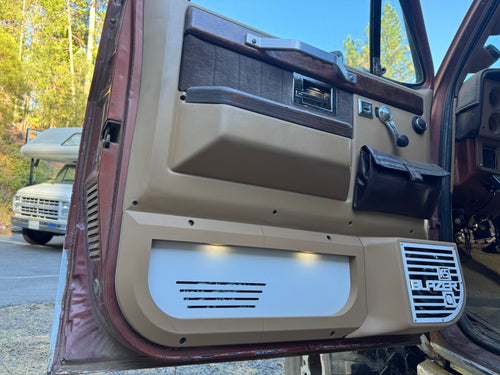
A practical restomod often starts with the things that affect real seat time. Better lighting makes night driving less stressful. A properly planned audio system makes a long drive more enjoyable. Sound deadener can take some of the tin-can feel out of an old cab. Modern speakers can be added without cutting up factory door panels when you use a platform-specific solution designed around the Squarebody cab.
For a truck that sees trail use, a restomod may mean upgrades that make sense for the way it is wheeled. For a K10, K20, Blazer, Jimmy, or Suburban, that could be suspension changes, tire clearance, recovery-minded accessories, or improved wiring and lighting. For a daily-driven C10, it could mean comfort and reliability upgrades that let you actually enjoy the truck in traffic instead of saving it for perfect-weather Sundays.
The line gets crossed when changes are made just because they are popular, not because they serve the build. A pile of universal parts, random switches, cut panels, and wiring added without a plan can make a good truck harder to use and harder to fix later. A restomod should solve problems, not create a fresh set of them.
Squarebody Restoration vs Restomod: Start With How You Use It
Before ordering parts, be honest about the job your truck needs to do. A show-quality original-style truck, a family cruiser, a workhorse, and a trail rig do not need the same approach.
If the truck comes out a few times a month for cruise nights and local shows, an original-style restoration may give you exactly what you are after. You can enjoy the era-specific feel without worrying that it has to handle a long commute, rough forest road, or a packed highway every day.
If you drive it often, comfort and usability deserve more weight. There is nothing wrong with keeping the factory look while improving the stuff you touch and use every time you get in the cab. A clean speaker installation, better cup holder setup, useful console height, and organized wiring can make an old truck much easier to live with. Those changes do not have to ruin the character of the interior.
If it is an off-road build, function should lead. A pristine stock restoration is not usually the best plan for a truck that will see rocks, mud, brush, and recovery straps. Build the K-series truck for the terrain and accept that some changes are there because the truck has a job to do.
There is also a middle ground that works well for a lot of owners: preserve what is good, update what is weak, and avoid irreversible changes unless they are truly necessary. That approach lets you keep the old-truck experience while fixing the parts that make old trucks frustrating.
Ask Whether the Change Can Be Reversed
This is one of the best filters for deciding between restoration and restomod work. A bolt-on upgrade can usually be removed later. Cutting an original dash, hacking factory door panels, or drilling holes through clean trim is a different kind of decision.
Reversible upgrades are especially smart on an intact truck. If you want better sound, use a solution made for the Squarebody instead of forcing a universal panel to fit. If you need a more functional cab setup, look for parts that use the truck's existing layout rather than making permanent changes for convenience.
That does not mean every restomod has to be reversible. A full custom build is its own thing, and there are times when a rough, incomplete truck is the right candidate for major changes. It simply means you should know what you are giving up before the cutoff wheel comes out.
Let the Truck Tell You What It Wants to Be
Condition matters. A complete, rust-free truck with original trim, a solid interior, and matching components is a strong restoration candidate. A truck with missing interior pieces, an engine from another vehicle, old wiring repairs, and years of hard use may be a better restomod candidate. Neither one is automatically more valuable as a truck. They just call for different thinking.
Do not force a restoration on a truck that has already been heavily altered if the correct parts are gone and your real goal is to drive it. On the other hand, do not tear into a clean survivor just because a big-wheel, big-power build is getting attention online. The truck's condition, completeness, and story should have a say.
Build in Stages Instead of Chasing a Finished Truck
A Squarebody build rarely happens all at once. That is normal. The mistake is buying parts without deciding the final direction, then having to redo work later.
Start by making the truck safe and dependable for the use you have planned. Next, handle the upgrades that improve everyday driving. Then move into appearance and detail work. This order gives you time to live with the truck and figure out what actually bothers you. You may find that a clean, stock-looking interior with better sound and better organization is all the restomod you wanted.
Keep a simple build list with three columns: must fix, want to improve, and nice to have. It sounds basic, but it keeps a project from turning into a parts pile. It also helps protect the budget for the pieces that really matter, like correct-fit parts and clean installation work.
The Right Build Is the One You Will Use
A restored Squarebody can be a time capsule. A well-planned restomod can be a truck you grab the keys to without thinking twice. Both can be done right, and both can be messed up by chasing somebody else's idea of what the truck should be.
Keep the parts that make your truck special. Upgrade the parts that keep you from enjoying it. Then build it carefully enough that, years from now, you are still glad you made the call.
Shop the Part
A console lift and a no-cut door speaker panel are the kind of restomod upgrades that respect the original cab:
Need The Parts For This Build?
We carry everything mentioned in this guide — picked and backed by real Squarebody owners.
0 Comments
Leave a Comment