
How to Sound Deaden a Squarebody Cab
Quick Takeaways
- Butyl mat damps panel resonance by converting vibration into heat — it doesn't block airborne noise. There's no magic coverage percentage; ~25% is where most people notice a difference, with smaller gains after. Doors and floor give the highest return; cargo area matters more on a K5, Jimmy, or Suburban. Use large single pieces on clean metal and roll them down — full contact is the whole mechanism. Two layers of the same butyl mostly adds weight; layering only helps with materials that do different jobs.
A Squarebody doesn't need to be silent to be enjoyable. It's an old truck, and some mechanical noise is part of the deal. But excessive floor heat, road drone, rattling doors, and a cab that rings like a drum every time you hit a seam wear on you fast — especially on a truck you actually drive.
Sound deadening is one of those upgrades that gets skipped because it isn't glamorous. Nobody posts a photo of butyl mat. But it quietly improves everything else in the cab: the stereo sounds better, conversation is easier, summer driving gets less miserable, and the doors close with a solid thud instead of a tinny clang. If you've already got the interior apart for carpet, wiring, or stereo work, this is the moment to do it.
What Sound Deadening Actually Does
The butyl mat most people use is a constrained layer damper. It's a layer of viscoelastic butyl rubber backed by thin aluminum foil. When a metal panel starts to vibrate, the butyl stretches and compresses, converting that vibration into a tiny amount of heat that dissipates harmlessly. The panel stops acting like a drum head.
That's damping — and it's specifically about panel resonance. It's not the same as blocking airborne noise, and it's worth knowing the difference so you buy the right thing for the problem you have. Butyl kills rattle, ring, and resonance. Foam absorbs. Heavy vinyl blocks. On most Squarebody builds, butyl on the metal is the foundation and where the biggest bang-for-buck lives. The DC Audio Butyl Sound Deadener is what we run and sell for exactly this job — vibration and heat control on the metal, which is where a Squarebody needs it most.
The Coverage Question Everybody Argues About
Search this topic and you'll find people insisting on 25% coverage, others saying 50%, and others swearing anything less than 100% is a waste of time. Here's the honest answer: coverage percentage isn't really the rule people treat it as.
A constrained layer damper doesn't work purely on the percentage of area you cover. Panel size, shape, thickness, and what's around it all change how a given panel behaves — so a number that's plenty on one panel can be light on another. As a practical starting point, most people find 25% coverage on a panel is where you start noticing a real difference, and increasing coverage keeps improving it with progressively smaller returns. Full coverage does work, but you're adding weight and cost for gains that shrink the further you go.
What actually matters more than the percentage: use larger single pieces instead of a bunch of small ones, put them on the panels that actually resonate, and roll the material down so it fully contacts the metal. A few well-placed large pieces on the middle of a big flat panel does more than a mosaic of scraps.
Where to Treat First on a Squarebody
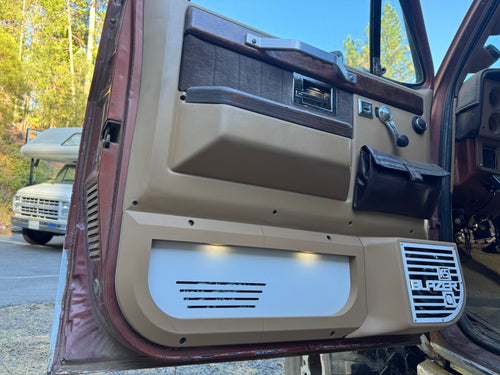
Doors. This is the highest-return area, and on these trucks it's doubly true because the doors are big, flat, and thin. If you're running speakers in the doors, deadening the outer skin behind the speaker gives that speaker a solid, non-resonant surface to work against — which does more for midbass than most people expect. If you're already in there installing door speaker panels, do the deadening at the same time. The door's already apart.
Floor and firewall. This is where the heat comes from, and on a Squarebody with a V8 and old exhaust routing, floor heat is a real quality-of-life issue in summer. It's also the main path for road and drivetrain noise. If your carpet's out for any reason, treat the floor.
Cargo area and rear panels. On a K5, Jimmy, or Suburban, the big open rear area rings and rattles more than a pickup cab. It's also where loose gear resonates against thin metal. Worth treating if you spend time back there or run a sub.
Roof. Lower priority for most, but it cuts rain noise and reduces that hollow feeling in a big open cab. Also helps with heat.
Doing It Right
Clean the metal first. Butyl adhesive needs a clean, dry surface — old dirt, grease, or flaking surface rust will let it release later, and a sheet that peels off inside a door is a rattle you'll never find. Wipe it down properly before anything goes on.
Temperature matters. Butyl gets stiff and won't conform or stick well when it's cold. A good rule: if it's too cold in the garage for you to want to work, it's too cold for the material. And don't cook it with a heat gun trying to speed things up — too much heat can damage the butyl layer and hurt how it performs.
Roll every piece down with a roller. You don't need to lean on it, but you do need full contact with the metal — that's the whole mechanism. A piece that's only touching in spots isn't damping anything. Cut generously and work in large pieces where you can, going over ridges and contours rather than cutting around every one.
Don't Waste Money on Layers That Don't Help
More isn't automatically better. Stacking two layers of the same butyl mat mostly just adds weight and stiffness — it doesn't block airborne noise, because that's not what butyl does. Layering only helps when you're combining materials that do different jobs: damping on the metal, then foam to absorb, then heavy vinyl to block if you're going that far.
There's a practical limit too. Overloading foam behind door cards causes fitment problems, excess material can interfere with getting trim back on, and enough weight will stress door hinges and slow down power windows. On an old truck with 40-year-old hardware, that's a real consideration. Treat the panels that need it, do it well, and stop.
Where It Fits in the Build
The best time to sound deaden is when the interior's already apart. If you're pulling carpet, running wiring, installing a stereo, or doing seat work, the access is already there and you're not paying the labor twice. That's true whether you're doing the work yourself on a Saturday or having it done.
It also pairs naturally with audio work. A quieter cab means you don't have to fight road noise with volume, and a non-resonant door means your speakers are working against something solid instead of a flexing panel. If you're building the whole system, how to upgrade Squarebody audio right lays out the order to do things in — and deadening belongs early, before the panels go back on.
For a daily-driven truck especially, this is one of those upgrades you feel every single trip without ever pointing at it. The truck just feels tighter, quieter, and less exhausting on a long drive. It doesn't change what the truck is. It makes the version you already have a lot easier to live with.
Frequently Asked Questions
How much sound deadening does a Squarebody need?
There's no magic percentage. Roughly 25% coverage on a panel is where most people start noticing a difference, and more coverage keeps helping with progressively smaller returns. What matters more is treating the panels that actually resonate — doors and floor first — using large single pieces and rolling them down for full contact.
Where should I sound deaden first?
Doors and floor give the highest return. Doors are big, thin, and where your speakers live, so damping them improves both noise and midbass. The floor and firewall handle heat and road noise. On a K5, Jimmy, or Suburban, the open cargo area is worth treating too since it rings more than a pickup cab.
Does sound deadening actually help car audio?
Yes, in two ways. It gives your speakers a solid, non-resonant surface to work against instead of a flexing door skin, which improves midbass. And a quieter cab means you're not fighting road noise with volume. Deadening the doors while you're already in there for speakers is the efficient move.
Should I use two layers of butyl mat?
Usually not. Two layers of the same butyl mostly adds weight and stiffness without blocking more airborne noise, because damping and blocking are different jobs. Layering only helps when you combine materials that do different things — damping on metal, foam to absorb, heavy vinyl to block. Doubling one product hits diminishing returns fast.
When is the best time to sound deaden a Squarebody?
When the interior is already apart. If you're pulling carpet, running wiring, installing a stereo, or doing seat work, the access is already there and you're not paying to take things apart twice. Do it before panels and carpet go back in.
Need The Parts For This Build?
We carry everything mentioned in this guide — picked and backed by real Squarebody owners.
0 Comments
Leave a Comment