
How to Add Squarebody Storage Without Cutting
A Squarebody cab can feel plenty big until you start using the truck. Put a drink, phone, registration, recovery strap, sunglasses, and a few basic tools inside, and suddenly everything is on the seat or sliding across the floor. If you are figuring out how to add squarebody storage, start with one rule: add useful places for your stuff without drilling holes in good original parts or making the cab feel cluttered.
These trucks were built simple. That is part of why we like them. But compared with a newer truck, a 1973-1991 Chevy or GMC cab does not give you many places to stash the things that come along on a daily driver, show truck, work truck, or trail rig. The good news is you can fix that without turning the interior into a pile of universal accessories.
Start With What You Actually Carry
Storage works best when it solves a real problem. Before buying or mounting anything, empty the cab and look at what rides with you every day. A cruiser may need room for a phone, drinks, sunglasses, registration paperwork, and charging cords. A trail truck may need tie-down straps, gloves, a flashlight, first-aid gear, and a few trail tools. A work truck might need room for paperwork, a tablet, and small hand tools.
Do not try to store everything in one giant console. That usually eats up leg room, makes access to the shifter awkward, and leaves you digging through a deep box to find one small item. Split your gear by how often you use it. Keep the stuff you grab while driving up front. Put emergency gear and seldom-used tools under the seat, behind the seat, or in a secured rear storage area.
Also be honest about how the truck is used. A bench-seat C10, a manual-transmission K10, and a K5 Blazer do not have the same open space or the same mounting options. Your shifter placement, seat travel, transfer case lever, parking brake, and passenger leg room all matter.
How to Add Squarebody Storage at the Center of the Cab
The center area is usually the first place to improve because it is where daily-use items belong. On many Squarebody trucks, the factory console arrangement sits low, and the cup holder situation is not exactly built for modern drink sizes. Raising the console with a vehicle-specific console lift can make the center space more usable while bringing cup holders closer to where you can actually reach them.
The key is fitment. A console setup should look like it belongs in the truck, stay put on rough roads, and not interfere with seat belts, shifter travel, or your ability to slide the seat. Measure first if your truck has aftermarket seats, a swapped transmission tunnel, a floor shifter, or custom carpet. Those changes can affect clearances quickly.
A good center setup handles the small stuff: drinks, phone, wallet, charging cable, and loose change. Use a shallow organizer tray or divided insert if the console is deep enough. It keeps the bottom from becoming a graveyard of old receipts, screws, and pocket knives.
If you run a manual transmission or a four-wheel-drive transfer case lever, cycle both shifters through their full travel before finalizing any console or storage mount. Do it with the seat in your normal driving position. What clears while parked can hit your knee or block a shifter when you are actually using the truck.
Keep charging gear from becoming a wiring mess
A phone mount and charging port are handy, but loose wiring makes an old truck interior look unfinished fast. Route charging wires where they are protected from sharp metal edges, pedal movement, and seat tracks. Use grommets anywhere wiring passes through sheet metal, and keep power wiring fused correctly at the source.
If you are already adding audio, this is a good time to plan charging, switches, and accessory wiring together. You do not need to see every wire to know the install was done right. In fact, the cleaner installs are usually the ones you barely notice.
Use the Space Under and Behind the Seat
Under-seat storage is one of the best answers for gear you need in the truck but do not need at every stop. Low-profile bags, secured tool rolls, and shallow cases work well here. They keep weight low and out of sight without taking up the center of the cab.
Make sure the item cannot slide forward under the pedals or move around during hard braking. A loose tool bag is not storage. It is a projectile. Use a strap, a properly secured tray, or a case that fits tightly enough to stay where you put it.
Regular-cab trucks with a bench seat can have usable room behind the seat, but it is limited and changes with seat position. Soft storage bags are usually better than hard plastic bins in that spot because they can fit the shape of the cab without pushing the seat forward. Keep taller items away from the rear glass, especially if the truck sees rough roads or trails.
For extended-cab, Blazer, Jimmy, and Suburban owners, the rear area gives you more options, but it still needs a plan. Heavy tools, recovery gear, and spare parts need to be tied down. A clean cargo setup is safer, quieter, and easier to live with than a stack of totes that shifts every time you turn.
Add Door Function Without Ruining the Door Panels
Squarebody doors are an obvious place to want more storage, but this is where people can do permanent damage in a hurry. Factory door panels are getting harder to find in decent shape. Cutting a big opening into one for a generic pocket may give you a place for a bottle, but it can also leave you with a panel that rattles, sags, or looks wrong.
Think about what belongs on the door. Small, light items are fine. Heavy bottles, tools, or anything that can bang against the panel are not ideal. Door-mounted storage also needs to clear the window mechanism, handle hardware, and speaker area.
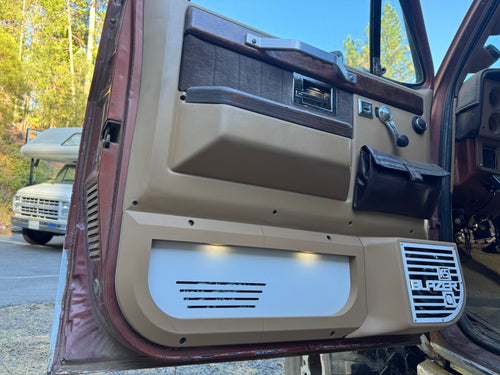
If you are upgrading the audio system, choose parts designed around the Squarebody door instead of forcing universal speaker adapters into the panel. A direct-fit lower door speaker panel lets you add 6.5-inch speakers without hacking up the factory door panel. That does not create a storage pocket by itself, but it keeps the door useful, clean, and serviceable while freeing you to put storage where it makes more sense - in the console, under the seat, or behind it.
That is the difference between adding features and just adding stuff. Every part in the cab has to work together.
Build a Storage Plan for Your Truck’s Job
A daily-driven C10 usually benefits most from organized console storage, a secure phone mount, and a small under-seat kit. Keep it simple. You should be able to clean the cab in a few minutes and find what you need without opening five compartments.
A trail-driven K10 or K5 needs more secured storage. Recovery gear, gloves, a fire extinguisher, a flashlight, and basic tools should be easy to reach but firmly mounted. Put the heavier items low and close to the center of the vehicle when possible. Do not mount gear where it can interfere with the pedals, shifters, seat movement, or an occupant getting out quickly.
A show truck has a different balance. You may not carry much gear, but the storage pieces need to match the rest of the interior. Color, material, fasteners, and fit matter. One poorly fitting universal organizer can stand out more than the nicest set of wheels.
Avoid These Common Squarebody Storage Mistakes
The biggest mistake is drilling first and thinking later. Test-fit everything with the seats moved, doors closed, shifters cycled, and a passenger sitting in the truck. Check the angle of your cup holders with a real drink in them. Check whether your phone mount blocks the heater controls. Little issues get annoying every time you drive.
Another common mistake is overloading the cab. A Squarebody interior looks right when it still feels like a Squarebody interior. Add storage where it earns its keep, not because an empty surface needs something bolted to it.
Finally, do not trust “universal fit” without checking the actual dimensions and mounting method. Universal can mean it fits after you trim it, drill it, bend it, and live with the compromises. Platform-specific parts are worth it when they save original panels and fit the cab the way they should.
The best storage upgrade is the one you stop thinking about after the first drive. Your drink stays put, your gear does not slide around, your phone is where you can reach it, and the cab still feels like the truck you bought in the first place.
Need The Parts For This Build?
We carry everything mentioned in this guide — picked and backed by real Squarebody owners.
0 Comments
Leave a Comment