
Best Squarebody Trail Ready Mods
Quick Takeaways
- Suspension first — good springs and shocks beat a tall lift for real trail control. Steering is the mod nobody brags about and everybody needs; fix it as a system, not one part at a time. Tires are the biggest immediate difference-maker, but match tread to your actual terrain and use. Armor should match your terrain — recovery points and vulnerable areas first, not steel nose to tail. Interior function isn't fluff on a truck you're in for hours; secure storage keeps gear from becoming projectiles.
A Squarebody that looks right in the driveway can still fall apart fast on the trail. The first time you stuff a front tire into a washout, lean on old steering, or reach for a drink with nowhere to put it, you find out which parts actually matter. Building a trail-ready Squarebody isn't about making a show truck with mud tires. It's about building one you trust when the terrain gets rough and the day gets long.
One thing first: this is about what to add to the truck. If you haven't gone through the truck's condition yet — frame, cooling, driveline, brakes — do that before you spend money on mods, because the trail is very good at finding what you ignored. That side is covered in the Squarebody off-road prep guide. Once the truck is sound, here's what's actually worth building onto it, roughly in the order it pays off.
Suspension Comes First
Most Squarebodies are old enough that even a stock-height truck is driving on borrowed time. Worn leaf springs, sagging bushings, tired shocks, and unknown lift parts from a previous owner make a truck feel sketchy before you ever leave pavement. This is usually the first real money worth spending.
For a mild trail truck, a balanced setup beats chasing height. Good springs and quality shocks do more for control than a cheap tall lift ever will. A truck with sensible ride height, decent articulation, and predictable road manners is more useful than one that sits sky-high and beats you up on every uneven road. The trade-off is real: more lift helps tire clearance and breakover, but it hurts steering geometry, driveshaft angles, and stability. If your truck still sees highway miles and camping trips, moderate usually wins. Build around the tire size you actually need, not the one that gets a reaction at the gas station.
If you want articulation and corrected geometry without stacking height, a CFMi Zero Lift Shackle Flip Kit is one of the cleanest ways to get there on a truck you still drive on the street. Adjustable rear spring hangers let you dial in spring angle and wheelbase once ride height changes. For picking the whole package, how to pick a Squarebody suspension kit covers what belongs in a good one.
Steering Is the Mod Nobody Brags About
A lot of Squarebody owners get used to sloppy steering and call it normal. Common, sure — but not acceptable on the trail. Once you add larger tires, more suspension travel, and rough terrain, every weak steering part gets exposed.
A trail-ready truck needs a tight steering box, healthy linkage, and frame support where the box mounts. If the truck wanders on the road, it'll be worse in rocks, ruts, and off-camber sections — and that gets tiring fast, then unsafe. This is one area where piecemeal fixes waste money. If the box is tired, the tie rod ends are loose, and the rag joint is worn, replacing one part might help but won't transform anything. Think in systems. A solid steering setup makes the whole truck feel newer, more planted, and easier to place on the trail.
Tires and Wheels Change Everything
No trail mod list skips tires. They're the most immediate difference-maker on dirt, mud, rock, and loose climbs. If the truck can't put power down with confidence, everything else is working uphill.
The right choice depends on use. An aggressive mud tire looks the part and works in the right terrain, but it's loud, heavy, and vague on pavement. A good all-terrain is often the better fit for a truck that sees mixed use — it rides better, tracks better, and handles most trails a full-size Squarebody should reasonably be on. Wheel choice matters too: the right width and backspacing gives clearance without creating rubbing or beating up wheel bearings. And more tire isn't always more useful. A 35 on a well-sorted truck works better than something bigger stuffed under a setup that rubs, binds, and loses its manners. Our tire size comparison breaks down what each size actually costs you.
Armor and Bumpers Matched to Real Use
Trail damage on a Squarebody gets expensive, because body lines, trim, and sheet metal aren't getting easier to find. If you actually wheel the truck, basic protection isn't cosmetic — it's what lets you use the truck without cringing at every ledge and stump.
A good front setup gives you recovery points, better approach angle, and a solid winch mount if that's part of the plan. The CFMi Front Winch Cradle keeps the approach angle clean while giving you a real mount, with wing add-ons if you want full-width coverage. Rear protection matters too, especially on longer trucks that drag the back end — for K5s and Jimmys, the rear winch bumper covers that end properly. Underbody coverage starts making sense as terrain gets technical; a gas tank skid plate is the one you regret skipping the first time you hear the tank meet a rock.
Restraint pays off here. Not every truck needs armor nose to tail — heavy steel everywhere adds weight and changes how the truck rides and responds. If your Squarebody mostly sees forest roads, hunting property, and moderate trails, prioritize recovery points and the most vulnerable areas first. There's more on that balance in choosing a Squarebody off-road bumper.
Lighting Is One of the Most Practical Trail Mods
Old factory lighting is the quickest way to make a night trail ride feel sketchy. Trail lighting isn't about turning the truck into a rolling stadium — it's about seeing what matters without overcomplicating things.
Good headlights, usable auxiliary lights, and clean wiring make a bigger difference than most people expect. A solid spread pattern helps on slow trails; longer-distance lighting helps on open roads and desert terrain. If you wheel in dusty groups or wooded areas, controlled placement matters more than raw brightness. Keep it honest, though — cheap lights with poor beam control create glare and make visibility worse. Wiring matters as much as the housings: a dependable system works every time, handles vibration, and doesn't turn into an electrical gremlin six months later. That's covered in how to wire Squarebody auxiliary lights right.
Interior Mods Are Not Fluff on a Trail Truck
A lot of builds spend thousands underneath the truck and ignore the part where you sit for hours. That's a mistake. Interior function matters on a Squarebody because these trucks weren't designed around modern use, modern gear, or something as basic as a secure cup holder.
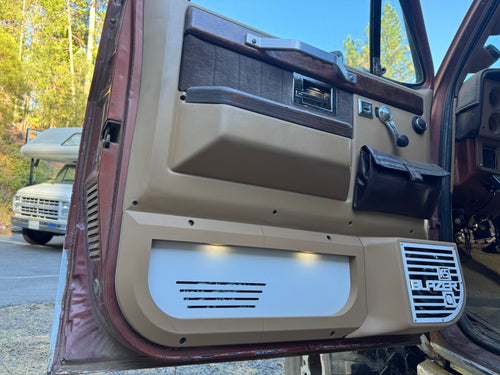
If you're out all day, a better console setup, practical storage, and secure places for drinks, radios, and small gear make the truck easier to live with — and keep loose stuff from becoming projectiles when the trail gets rough. The Console Combo raises the factory console to a usable armrest height and swaps the useless factory holders for adjustable ones that actually hold a tumbler. It's a bolt-in that reuses the factory brackets with no drilling, though the cup holders do require trimming the console opening to fit the larger sizes. If you want audio you can actually hear over tires, wind, and drivetrain noise, platform-specific door speaker panels put the sound where it works without hacking up the doors.
Recovery Gear Deserves a Plan
A lot of people buy a strap, toss it behind the seat, and call it done. Recovery doesn't work like that. If the truck gets stuck, you need solid front and rear recovery points, gear rated for the vehicle, and some thought about where it all lives.
For many trail trucks a winch is worth it, especially if you wheel alone or travel remote. But even without one, quality straps, rated shackles, and proper mounting points are basic insurance. Accessibility is the part people miss — gear buried under loose tools and camping junk doesn't help when the truck is axle-deep and daylight's fading. Match the equipment to the truck and terrain: a half-ton on mild wooded trails needs a different setup than a heavy Suburban in mud or rock. Bigger isn't automatically smarter if it adds weight and complexity you don't need. The full breakdown is in Squarebody recovery gear: what to actually carry.
Build for Your Kind of Trail
The best trail mods are the ones that solve the problems your truck actually has. A K5 on weekend forest trails needs a different recipe than a crew cab that sees ranch work, camping, and occasional mud. The right build stays comfortable enough to use, tough enough to trust, and simple enough to keep alive.
That usually means suspension, steering, tires, protection, lighting, and interior function before anything more glamorous. Lockers and regearing are real improvements, but they make more sense once the truck is dependable and the basics are handled — not as a random add-on. Build the truck so it works better every time you use it, not just so it photographs well with a flex shot. When a Squarebody is sorted the right way, it still feels old school. It's just a whole lot more capable.
Frequently Asked Questions
What's the first mod for a trail-ready Squarebody?
Suspension, once the truck's condition is sorted. Most of these trucks are riding on worn springs, tired shocks, and mystery lift parts. Good springs and quality shocks do more for trail control than a tall lift ever will. Build around the tire size you actually need, not the biggest one that fits.
Do I need a big lift to wheel a Squarebody?
No, and a tall lift often costs you more than it gives. Extra height helps clearance and breakover but hurts steering geometry, driveshaft angles, and stability. A moderate setup with good articulation and predictable manners is more useful for most trucks — especially ones that still see highway and camping miles.
Are mud tires the right choice for a Squarebody trail truck?
Only if your terrain calls for it. Mud tires work in the right conditions but are loud, heavy, and vague on pavement. For mixed use — trails plus real road miles — a quality all-terrain rides better, tracks better, and still handles most trails a full-size Squarebody belongs on.
How much armor does a trail Squarebody need?
Match it to your terrain. Recovery points and the most vulnerable areas come first — front and rear protection, then underbody coverage like a gas tank skid as terrain gets technical. Full armor nose to tail adds serious weight and changes how the truck rides, so build to what you actually wheel.
Do interior upgrades matter on a trail truck?
Yes, more than people expect. You're in that cab for hours, and loose gear becomes projectiles when the trail gets rough. A console with real storage and secure cup holders keeps the cab usable all day. It's the difference between chasing your stuff around the floor and actually driving the truck.
Need The Parts For This Build?
We carry everything mentioned in this guide — picked and backed by real Squarebody owners.
0 Comments
Leave a Comment