
Best Squarebody Trail Accessories That Earn Space
A Squarebody can be a great trail truck, but it does not need a pile of bolt-ons to prove it. The best squarebody trail accessories are the ones that solve a real problem: getting unstuck safely, seeing the trail after dark, protecting vulnerable parts, carrying what you need, and making the cab work better when the truck is tilted sideways on a rough road.
That matters with these trucks. A 1973-1991 Chevy or GMC has plenty of room, simple mechanicals, and a tough old-school feel, but it was built long before modern off-road accessories became an aisle at every parts store. Buy gear around how you actually use your K10, K20, K5 Blazer, Jimmy, or Suburban. A forest-road cruiser needs different equipment than a rig that sees rocks, mud, and recovery straps every weekend.
Best Squarebody Trail Accessories Start With Recovery
Recovery gear is not glamorous, but it is the stuff you are glad to have when the trail turns slick or a tire drops into a hole. Start with properly rated recovery points front and rear. A receiver hitch can be useful at the rear when equipped with a purpose-built recovery attachment, but never hook a strap to a random ball mount. Hitch balls, light-duty brackets, and bumper sheet metal are not recovery points.
Up front, look at how your bumper and frame are set up before buying anything. Squarebody front ends vary a lot after decades of repairs, bumper swaps, lift kits, and previous-owner engineering. The right setup needs to tie into solid structure, not just the thin face of a bumper. If you run a winch, the winch mount, fairlead location, wiring, and battery condition all need to work together.
Carry a recovery strap or kinetic rope, soft shackles or properly rated shackles, gloves, and a way to air tires back up. A compact air compressor and a real tire gauge are worth their space. Lowering tire pressure can make a huge difference on loose dirt, sand, and rocks, but only if you can set it back correctly before heading home.
There is a trade-off here. Heavy recovery bumpers and winches add useful capability, but they also add weight over the front axle. On a leaf-spring Squarebody, that can affect ride height, handling, and spring sag. Build for the terrain you run, not the worst-case recovery video you watched last week.
Lighting You Can Use Without Lighting Up Everyone Else
Old sealed beams and tired factory wiring do not make night trail driving any easier. Good lighting starts with restoring the basics: clean grounds, healthy connectors, proper headlight aim, and wiring that is not heat-baked or patched together with household wire.
Auxiliary lights can help, but placement and beam pattern matter more than simply adding more lamps. A wide, low-pattern light can help you see the shoulder and trail edges. A forward-driving pattern reaches farther down an open road. Rock lights are useful for spotting tires and obstacles at low speed, especially on a longer wheelbase truck where you cannot see what the rear tires are doing.
Wire every added light through a fuse, relay, and switch that makes sense in the cab. Keep wiring away from exhaust, sharp sheet metal, moving steering parts, and suspension travel. Use grommets where wires pass through metal. That sounds basic because it is, but bad wiring is one of the most common reasons trail accessories become a headache.
Also, be respectful with the light bar. Bright forward lighting is for off-road use, not for blasting other drivers on public roads. Properly aimed lights are more useful than a wall of glare.
Protection That Fits How You Wheel
Trail protection should follow the weak points on your particular truck. A K5 Blazer on rocky trails may benefit from rocker protection and underbody guards. A pickup used mostly on uneven fire roads may need more attention paid to steering components, brake lines, fuel lines, and anything hanging below the frame.
Skid plates can protect the transfer case, fuel tank, and other exposed areas, but do not assume every truck needs a full suit of armor. Added steel takes away ground clearance if it hangs too low, adds weight, and can make service harder. A well-designed guard is tucked up close, drains mud and water, and can still be removed without making a simple job miserable.
Rocker protection is another one worth thinking through. Sliders need to mount securely and sit where they can actually take a hit. Steps marketed as off-road protection often bend the first time the truck lands on them. If you use your truck as a daily driver and need a step for passengers, choose a design that balances access and protection instead of pretending one light-duty tube does both jobs perfectly.
Do not overlook the simple stuff. Secure a loose spare tire. Check that the battery is clamped down. Protect exposed wiring near the headers and starter. A truck that survives the trail is usually a truck whose owner handled the boring details first.
Tires, Air, and a Full-Size Spare
Tires are the accessory that changes a trail truck more than almost anything else. Good all-terrain tires are a solid choice for a Squarebody that sees highway miles, dirt roads, snow, and occasional trail use. A more aggressive mud-terrain may make sense for deep mud and loose ground, but expect more road noise, different wet-road manners, and faster wear depending on the tire.
Size needs to match the truck's gearing, lift, wheel backspacing, steering travel, and intended use. Bigger is not automatically better. An oversized tire that rubs hard, kills steering angle, or makes the truck lazy on the highway is not an upgrade. Check clearance at full lock and through suspension movement, not just while the truck is parked in the driveway.
Bring a full-size spare that matches the tires on the ground. Make sure the jack works with the truck's lift height and that you have a solid base for soft dirt. A factory jack may be fine for roadside use on a stock truck, but it may not reach or feel stable enough on a lifted rig. Test your plan at home before you need it on a trail.
Cab Accessories That Make Long Trail Days Better
Trail gear is not all bumpers and tires. A Squarebody cab can get cluttered fast, especially when it is carrying maps, radios, recovery gear, water, tools, and passengers. The right interior upgrades make the truck easier to live with without cutting up good original panels.
Cup holders are a small upgrade that earns its keep. Factory Squarebody interiors were not designed around modern drink containers, and a loose bottle rolling under the pedals is not funny when you are picking through a rough section. A Squarebody-specific console lift and adjustable cup holder setup can improve access and storage while keeping the cab looking like it belongs there.
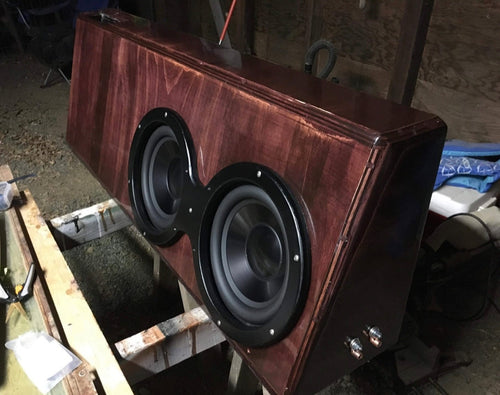
Audio is useful on the trail too, but build it for the way the truck is used. A clean speaker upgrade can make navigation, weather reports, trail communication, and music easier to hear over tire noise and an old small-block. The trick is doing it without hacking up factory door panels just to fit a speaker.
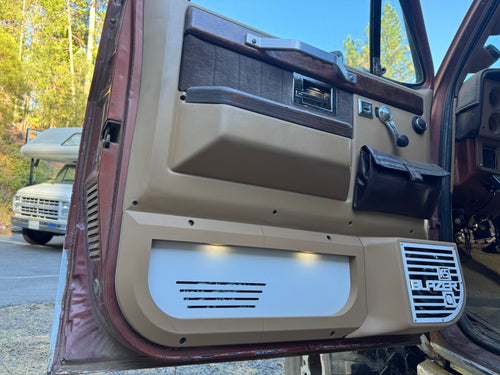
At Blazin' Biddles Off-Road, that is why we build no-cut lower door speaker panels around the Squarebody cab instead of calling a universal panel good enough. A direct-fit interior part should look right, stay put, and leave you with options if you ever want to change the truck later.
For any cab accessory, think about reach and retention. Can you grab it with a seat belt on? Will it stay where it belongs when the truck leans? Does it interfere with shifters, the glove box, pedals, or a passenger's knees? Those are the questions that separate useful interior upgrades from clutter.
Storage, Communication, and Trail Readiness
A hard-mounted or well-secured storage setup keeps the essentials from becoming projectiles. Carry basic hand tools, a first-aid kit, fire extinguisher, tire repair supplies, water, and a flashlight where you can reach them. The exact loadout depends on where you travel and whether you wheel alone, but loose gear should never be the plan.
A radio or other trail communication setup can be worthwhile when you run with a group or travel beyond cell coverage. Keep the install clean. Route power correctly, use an appropriate fuse, mount the microphone where it is easy to reach, and avoid blocking your view with a big bracket on the windshield.
Before every trip, give the truck a quick once-over. Check fluid levels, lug nuts, steering play, driveshaft joints, brake lines, tire condition, and battery connections. Accessories help, but they do not replace maintenance. A well-sorted Squarebody with modest gear will usually take you farther than an overloaded truck with a bunch of untested parts.
Build your trail truck one useful piece at a time. Start with tires, recovery, lighting, and the safety basics. Then add protection and cab upgrades based on what you learn from using it. If we would not run it on our own truck, we do not think it belongs on yours either.
Need The Parts For This Build?
We carry everything mentioned in this guide — picked and backed by real Squarebody owners.
0 Comments
Leave a Comment