
How to Add Sound Deadener to a Squarebody
A Squarebody cab has plenty of character. It also has big, flat sheet-metal panels, old weatherstrips, sparse factory insulation, and enough room behind the door panels to make every tire hum and exhaust note feel louder than it needs to. When you add sound deadener to a Squarebody, the goal is not to turn a 1984 K10 into a luxury car. It is to make the truck more comfortable to drive, let the stereo do its job, and cut down on the tinny resonance these cabs are known for.
The difference comes from putting the right material in the right place. Covering every inch of the truck with one product can cost more, add unnecessary weight, and still leave the biggest noise paths untouched.
Start With the Noise You Actually Have
Before peeling backing paper, take the truck for a drive and listen. A bare-cab project, a restored C10 with carpet, and a trail-driven K5 Blazer do not need exactly the same treatment.
If the doors rattle when the speakers hit, that is panel resonance. If you hear tire noise and heat through the floor, the floor and firewall need attention. Wind whistle around the doors usually points to worn seals, poor window adjustment, or a door that is not closing square. Sound deadener will not fix any of those mechanical problems.
Likewise, an exhaust leak, loose transfer-case shifter boot, missing floor plugs, or cracked firewall grommet can make a cab loud. Fix those first. Deadener works best after the truck is sealed up and the obvious rattles are handled.
What Sound Deadener Actually Does
The phrase “sound deadener” gets used for several different materials. They work together, but they do different jobs.
A butyl vibration-damping mat with an aluminum top layer is what most people mean by sound deadener. It sticks to sheet metal and stops broad panels from acting like a drum. Tap a bare Squarebody door skin and you will hear the difference once it is properly applied. This is the material that helps a door-mounted speaker sound tighter instead of making the whole door buzz.
Closed-cell foam is a decoupler and anti-rattle layer. It belongs between panels that may touch, such as a door panel and the inner door structure. It can also help keep trim from squeaking. It is not a replacement for a vibration damper.
Mass-loaded vinyl is a true noise barrier. It is heavier and more involved to install, but it is useful on floors, firewalls, and other areas where road and drivetrain noise are coming through the cab. It needs to be decoupled from the metal with foam to work as intended.
For a truck that sees hot summers, an insulation layer can help with heat as well as noise. Just be realistic about space under the carpet, behind kick panels, and around pedals. Thick material in the wrong spot can create fitment headaches fast.
Where to Add Sound Deadener on a Squarebody
You do not have to strip the cab to bare metal and cover every panel. Start with the spots that give you the most return for the work.
Doors
Doors are usually the first place we recommend, especially when the truck is getting upgraded speakers. Squarebody doors are large, and their inner and outer skins can resonate badly. Put vibration mat on the outer skin through the service openings, then apply it to accessible sections of the inner door structure.
You do not need 100 percent coverage. On a panel that is fairly stiff, strategic coverage on the large flat areas works well. Roll it down firmly so it is fully bonded to clean metal. A mat that is only stuck around the edges will not do much.
Keep the factory drain holes open. Do not block the window tracks, regulator arms, latch rods, or wiring. If you use closed-cell foam behind a door panel, keep it clear of the window path and do not create a sponge-like moisture trap. Water gets inside old truck doors. It needs a way back out.
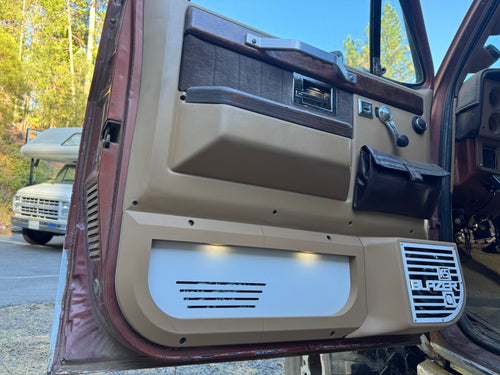
A solid door makes a noticeable difference with 6.5-inch speakers. The speaker is working against a more stable mounting area, and you are less likely to chase rattles after the panels go back on. That is one reason BBOR builds its lower door speaker panels around a no-cut, Squarebody-specific fit instead of asking owners to hack up original door panels.
Floor, Firewall, and Transmission Tunnel
For a daily-driven C10, K10, Suburban, or Blazer, the floor is where road noise and heat become obvious. Pulling carpet is more work than doing doors, but it pays off on longer drives. Start at the front floor, toe boards, transmission tunnel, and the area under the seats. Those panels carry a lot of tire, exhaust, and drivetrain noise.
The firewall can be worth doing while the interior is apart, but access varies by truck and by how much equipment is still in place. Work carefully around factory wiring, pedal linkage, and any pass-throughs. Do not bury connectors or make future service harder just for another small patch of material.
If you are adding a barrier layer under the carpet, mock up the carpet, sill plates, seat tracks, and console before final assembly. A thick stack of materials can make factory carpet fit poorly or put the seat mounting area under stress. Trim cleanly around seat mounts and never cover mounting threads.
Roof and Back Wall
A bare steel roof can make rain sound like a drum solo. Even a modest amount of damping mat on the roof skin calms that panel down. This is especially worthwhile in regular-cab pickups, K5 Blazers, Jimmys, and Suburbans where there is a lot of open cabin volume.
Be careful overhead. Clean the roof well, use material made to stay put in heat, and press it down completely. A heavy piece of poorly installed mat falling behind a headliner is a mess nobody wants to fix twice.
In a regular cab, the back wall is another easy target when the seat is out. On a pickup with a loud exhaust or aggressive tires, it can make the cab feel less hollow. Blazer, Jimmy, and Suburban owners should think about the rear interior panels and wheelhouse areas too, but keep access for trim hardware and removable panels in mind.
Prep Is Half the Job
Old Squarebody metal deserves a close look before anything gets stuck to it. Pull loose factory insulation, vacuum out dirt, scrape off old adhesive where needed, and address any active rust issue before covering it. Sound deadener is not a rust repair, and trapping moisture under material is the last thing you want in a truck you are trying to save.
Wipe the surface with a proper cleaner that leaves no residue, then let it dry. Test-fit pieces before removing the backing. Smaller sections are easier to work around braces, contours, and access holes than one huge sheet.
Use a roller. Work from the center outward and press the material into the contours. The goal is full contact, not a pretty pattern. Wear gloves around door openings and sheet-metal edges. Squarebody cabs are honest trucks, and some of those edges are still sharp.
Do Not Overbuild the Job
More material is not always better. A full-coverage install adds weight, takes time, and can make future wiring or repairs more difficult. For most trucks, start with vibration control in the doors, floor, tunnel, roof, and large rear panels. Then add foam where trim needs isolation. Add a barrier layer only where road noise is still a real issue and there is room to install it correctly.
Avoid cheap asphalt-based mat when possible. It can smell when hot, soften over time, and turn a clean interior job into a sticky one. Use quality butyl-based material that is meant for automotive interiors.
Also, do not use household insulation, open-cell foam, or anything that holds water inside doors or low on the floor. A quiet cab is not worth creating a rust problem.
Plan Around Your Audio Install
If speakers, amplifiers, or new wiring are part of the build, do the deadener before final audio assembly. Run speaker wire and power wire where they need to go, protect them at pass-throughs, and leave service slack where it makes sense. You do not want to pull a finished door panel later because a wire got pinched or a connector was buried behind a barrier layer.
For most Squarebody owners, the best plan is simple: make the doors solid, tame the floor and tunnel, stop trim from rattling, and keep the truck serviceable. You will still hear the engine and the tires, because that is part of driving one of these trucks. You just will not have to turn the stereo all the way up to hear it.
Need The Parts For This Build?
We carry everything mentioned in this guide — picked and backed by real Squarebody owners.
0 Comments
Leave a Comment