
How to Know What Fits Your Squarebody.
Quick Takeaways
- Check five things before buying: exact year, body style, drivetrain, cab configuration, and current modifications. Body style matters as much as year — pickups, K5s, Jimmys, and Suburbans don't all share interior and rear parts. Drivetrain is the detail for suspension and steering; 2WD and 4WD trucks are completely different underneath. Many trucks aren't stock anymore — verify what's actually on the truck, not just the VIN. "Fits all Squarebodies" is a red flag; real fitment language names body styles, drive types, and configs.
Buy one "Squarebody" part without checking the details and you can end up with a console that hits the seat, a speaker panel that misses the door layout, or suspension parts meant for a completely different front end. Sellers love to slap "fits 73–91 Chevy GMC truck" on everything, even when the real answer is a lot more specific. The good news is that once you know what to check, figuring out whether a part fits your truck gets a lot simpler.
Here's the method. Before you spend a dollar, run the part against five things about your truck. Nail these down and you knock out the large majority of fitment mistakes before they happen.
The Five Things to Check Before Buying
1. Exact year
There were running changes all through the Squarebody era — front-end styling, interior details, steering columns, wiring, emissions, and drivetrain hardware all shifted over the years. A part that fits an '81 may not fit a '73 or a '90. As a rough guide, parts interchange most easily within tighter year windows and get less certain the wider you stretch across the full 1973–1991 span. Always start with your exact year, not "it's a Squarebody."
2. Body style
This is the big one. Pickups, K5 Blazers, Jimmys, and Suburbans are all Squarebodies, but they don't all use the same interior and rear-body parts. A regular cab and a crew cab have different interior spacing. A K5 has a shorter wheelbase and different rear sheet metal than a pickup. A Suburban's longer enclosed body changes what works inside and in the cargo area. Confirm the part is built for your specific body style, not just the platform.
3. Drivetrain
For anything suspension or steering related, this is the detail that matters most. 2WD and 4WD trucks do not use the same suspension parts, steering components, or ride-height solutions. Spring rates, shock lengths, and steering geometry are not things to guess on. Before you buy shocks, springs, or lift parts, know whether you're 2WD or 4WD and whether the part is meant for a pickup or an SUV application.
4. Cab configuration
This matters most for interior parts. Bench seats, bucket seat swaps, manual transmission conversions, and aftermarket flooring all affect whether a console, cup holder setup, or storage solution actually fits. Seat width, transmission hump shape, and floor layout decide whether an interior part clears what it needs to clear or fights the seat every time you get in.
5. Current modifications
Many of these trucks aren't built like they left the factory. Plenty of Squarebodies have been swapped, lifted, lowered, patched, or pieced together from multiple donor trucks. A truck titled as one year might have doors, seats, axles, or interior parts from another. On an old build, actual configuration beats the VIN sticker every time — so verify what's really on your truck before you order.
Run a part against those five and most fitment guesswork disappears. The rest of this guide covers how those checks play out in the categories where people get burned most.
Where Fitment Gets Tricky: Interior
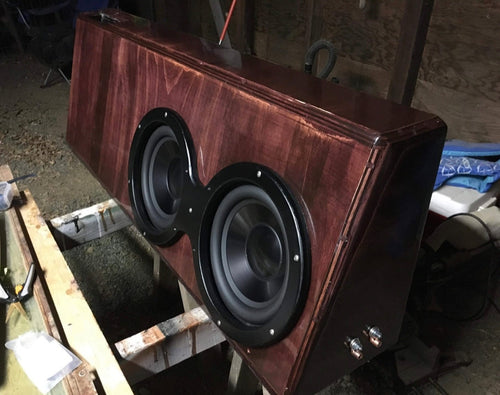
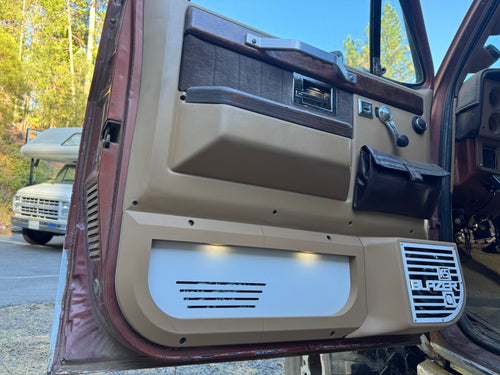
Interior upgrades are where a lot of owners get burned by generic listings. On paper, a center console or cup holder sounds universal. In the real world, seat width, transmission hump shape, floor layout, and cab dimensions decide whether it works. A console lift that fits a regular cab pickup can sit differently in a K5 or Suburban depending on seat setup and floor space. Door speaker panels have to match the door design, panel shape, and hardware location — not just the year range.
This is where platform-specific design earns its keep. Built-for-Squarebody interior parts solve real problems like bad cup holder placement, weak speaker options, and dead cab space that universal accessories solve badly. Blazin' Biddles Offroad builds its interior parts specifically for 1981–1991 K5 Blazers, Jimmys, and Suburbans, and covers what actually works in these cabs in the best Squarebody center console upgrades that fit.
Where Fitment Gets Tricky: Suspension
Suspension fitment is more exact than a lot of listings make it look. Beyond the 2WD-versus-4WD question, you need to know whether your truck is stock height or already modified, and whether the part is meant for a pickup or SUV application. A K5 Blazer used for trail duty may need a very different setup than a long-bed pickup that mostly sees pavement — both are Squarebodies, but the right fit is tied to weight, wheelbase, and use. A part that technically bolts on isn't always the right part. If you're sorting suspension, how to pick a Squarebody suspension kit walks through what actually goes into a good setup.
Where Fitment Gets Tricky: Exterior and Lighting
Bumpers, lights, mounting brackets, and body accessories vary more than people expect. Front clip changes, trim differences, and body-style dimensions all affect what lines up — even when the bolt pattern works, the final fit can look off if the part wasn't designed around your exact body style. Lighting is a good example: headlight upgrades are usually straightforward, but housings, bezels, aux light mounts, and bumper-mounted solutions vary with the front-end layout. Same with rear bumpers, which is why a bumper built for a K5 and Jimmy isn't the same part as one for a pickup.
Chevy Versus GMC
Many parts cross over cleanly between Chevy and GMC, especially chassis and mechanical categories. Where it splits is trim-specific parts, grilles, emblems, and cosmetic pieces, which are often brand-specific. Don't assume Chevy and GMC are identical in every detail just because the truck underneath is similar — confirm cosmetic and trim parts by brand.
The same "close but not identical" logic applies to the K5 specifically. Many front-end and drivetrain parts share with pickups while the rear stays K5-specific — we break that down in will all Squarebody parts fit a K5 Blazer.
The Mistakes That Cost People Money
The biggest one is trusting "fits all Squarebodies." Sometimes that just means the seller wants a wider audience. Real fitment language tells you what body styles, drive types, and configurations a part is built for — if a listing can't, treat it as a maybe, not a yes.
The next mistake is buying on appearance alone. Two trucks can look nearly identical in photos and still have different floor contours, seat spacing, axle setups, or mounting points, and that shows up fast during installation. The third is ignoring how the truck gets used — a daily-driven Suburban, a weekend show truck, and a trail-built K5 may all need different solutions even when parts technically interchange. And when something "mounts up," measure before you celebrate. If a part goes in the cab, under the dash, on the doors, or around the rear cargo area, compare the mounting style and real dimensions before you commit. Count on nothing — a 40-plus-year-old Squarebody carries surprises.
Treat Fitment as Part of the Build
The owners who get this right treat fitment like part of the build, not a box to check at the end. Start with the exact truck you have — those five checks — not the broad platform name. Then look for parts designed around real Squarebody problems instead of generic accessories dressed up with a wide year range.
A good part should fit the truck, match the way you use it, and save you from fabrication you never wanted to do. That's the standard worth shopping for. Squarebodies reward owners who pay attention — slow down, verify the details, buy for your exact setup, and you end up with parts that work the first time and a truck that feels better every time you drive it.
Frequently Asked Questions
How do I know if a part will fit my Squarebody?
Check five things about your truck before buying: exact year, body style, drivetrain (2WD vs 4WD), cab configuration, and current modifications. Match the part against all five. Most fitment mistakes come from skipping one of these and trusting a broad "fits all Squarebodies" listing instead.
What's the single most important fitment detail?
It depends on the part. For suspension and steering, it's drivetrain — 2WD and 4WD trucks are completely different underneath. For interior parts, it's body style and cab configuration. For cosmetic parts, it's year and Chevy-versus-GMC. Body style and drivetrain trip people up most often.
Why can't I just go by the model year?
Because year alone doesn't tell you body style, drivetrain, or whether the truck's been modified — and there were running changes throughout the era. Two trucks from the same year can take different parts if one's a 2WD pickup and the other's a 4WD Blazer, or if one's been swapped and patched over the decades.
Do Chevy and GMC Squarebody parts interchange?
Many do, especially chassis and mechanical parts. Trim-specific pieces, grilles, emblems, and cosmetic items are often brand-specific, though. Don't assume Chevy and GMC are identical everywhere just because the truck underneath is similar — confirm cosmetic and trim parts by brand.
Should I trust "fits 1973-1991 Chevy GMC truck" listings?
Be cautious. That broad language often just means the seller wants a wider audience. Real fitment detail names the specific body styles, drive types, and configurations a part is built for. If a seller can't tell you exactly why a part fits your truck, treat it as a starting point, not a guarantee.
Need The Parts For This Build?
We carry everything mentioned in this guide — picked and backed by real Squarebody owners.
0 Comments
Leave a Comment