Squarebody R/V Series Differences Made Clear
Share
An ’87 truck wearing old Squarebody sheet metal can cause a lot of confusion at the parts counter. The Squarebody R/V series differences are not a mystery once you know why GM changed the badges, but the change does matter when you are ordering parts, decoding a truck, or figuring out what you actually brought home.
The short version is simple: R replaced C for two-wheel-drive old-body trucks, and V replaced K for four-wheel-drive old-body trucks. GM used those letters to separate the carryover Squarebody line from the all-new C/K pickups that arrived for 1988. The details behind that change are where people get tripped up.
Why GM Changed From C/K to R/V
For years, Chevy and GMC truck model names were easy to read. C10 meant two-wheel drive, K10 meant four-wheel drive. The same basic pattern followed through C20/K20 and C30/K30. Then GM introduced its newer 1988 pickup line while still selling trucks based on the familiar Squarebody platform.
GM could not keep calling both generations C/K trucks without creating a paperwork mess. So the old-body trucks received the R/V designation. An R10 is the old-body two-wheel-drive half-ton. A V10 is the old-body four-wheel-drive half-ton.
That letter change does not mean an R/V is a totally different platform from the Squarebodies that came before it. In most practical ways, it is the continuation of the same truck family. The cab shape, interior layout, body style, chassis design, suspension concepts, and much of the mechanical thinking are familiar to anybody who has worked on a 1973-1987 C/K truck.
It is mainly a naming change created to distinguish the older platform from the newer 1988-up C/K pickups.
R/V Series Differences: What the Letters Mean
The first letter tells you the drivetrain layout.
An R-series truck is two-wheel drive. Think of R as taking the place of C. An R10 is comparable in basic layout to an earlier C10, while an R20 follows the same idea as a C20.
A V-series truck is four-wheel drive. Think of V as taking the place of K. A V10 is the old-body equivalent of a K10, and a V20 is the equivalent of a K20.
The number still indicates the truck’s weight class:
- 10 generally identifies a half-ton model.
- 20 generally identifies a three-quarter-ton model.
- 30 generally identifies a one-ton model.
This is especially important on trucks that have been worked on over the last 35-plus years. Axles get swapped. Springs get changed. A half-ton cab can wind up on a different frame. A badge is useful, but it is not the final word.
Which Years Used R and V Badges?
The R/V naming started in 1987 on the old-body truck line. That was the transition year when GM sold the familiar Squarebody pickups under the R/V designation while the next-generation 1988 C/K pickups were coming into the picture.
For conventional-cab pickups, 1987 is the year most people need to watch. If you have an old-body 1987 Chevy or GMC pickup, it may be an R10, R20, V10, or V20 rather than a C10, C20, K10, or K20. It is still commonly called a Squarebody, and for good reason. It shares the basic old-body DNA.
The R/V designation continued longer on the full-size utility models. The Chevrolet Blazer, GMC Jimmy, and Suburban stayed on the older platform through the 1991 model year. That is why a 1991 K5-style truck is not necessarily called a K5 in the formal model designation. It may be an R-series two-wheel-drive utility or a V-series four-wheel-drive utility, depending on how it left the factory.
That 1987-1991 Blazer, Jimmy, and Suburban range is a big reason fitment listings can look confusing. A catalog may split a part at 1987, another may carry the application through 1991, and both can be right depending on the part.
The R/V Series Is Still Squarebody
A late R/V truck is sometimes left out of Squarebody conversations because it has a newer model year on the title. That does not make much sense once you look at the truck.
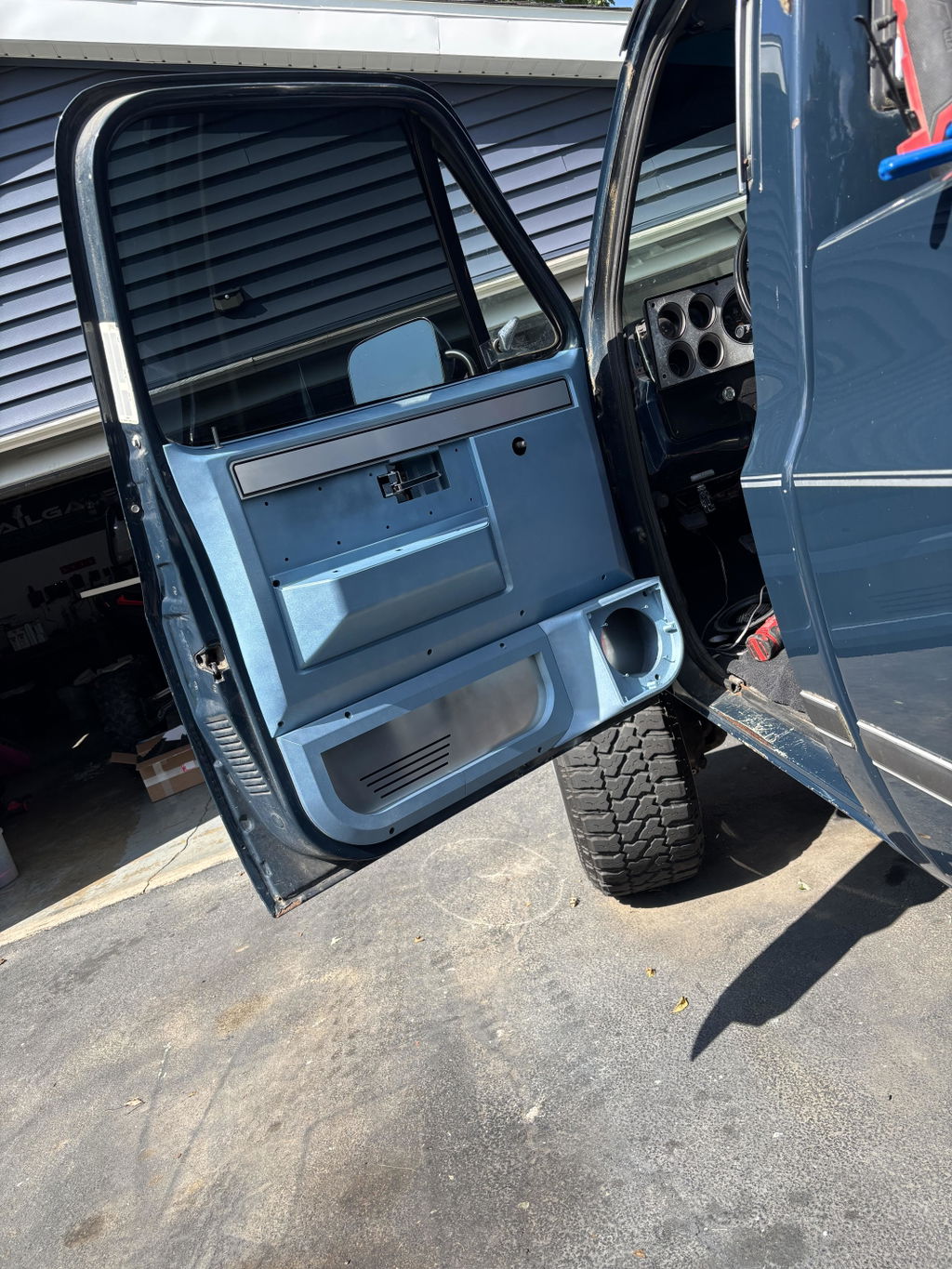
The 1987 R/V pickups and the 1987-1991 R/V Blazer, Jimmy, and Suburban models retain the classic square cab and familiar body style. Inside, they still have the dash and door-panel layout Squarebody owners know. Underneath, they retain the old-school architecture that makes these trucks straightforward to work on and easy to build around.
There are year-to-year details, though. The biggest one people run into is fuel delivery. Many late R/V trucks use throttle-body injection, commonly called TBI, while earlier Squarebodies may be carbureted. That affects engine-related service parts, fuel-system work, wiring, and gauge troubleshooting. It does not automatically change every body, interior, suspension, or audio fitment item.
The same goes for trim. A truck may have different moldings, grille details, emissions equipment, or wiring variations than an earlier example. Calling it a Squarebody is correct. Assuming every part from a 1973 truck bolts right onto a 1991 Suburban is where trouble starts.
Why Parts Fitment Gets Confusing
The R/V name change is only one part of the fitment puzzle. Body style is usually just as important.
A 1987 R10 regular-cab pickup, a 1990 V1500 Suburban, and a 1991 V-series Jimmy may all be old-body Squarebodies, but they do not share every part. Pickup doors, Suburban doors, dash wiring, cargo-area trim, rear suspension pieces, and wheelbase-specific components need to be treated as separate applications when they are separate.
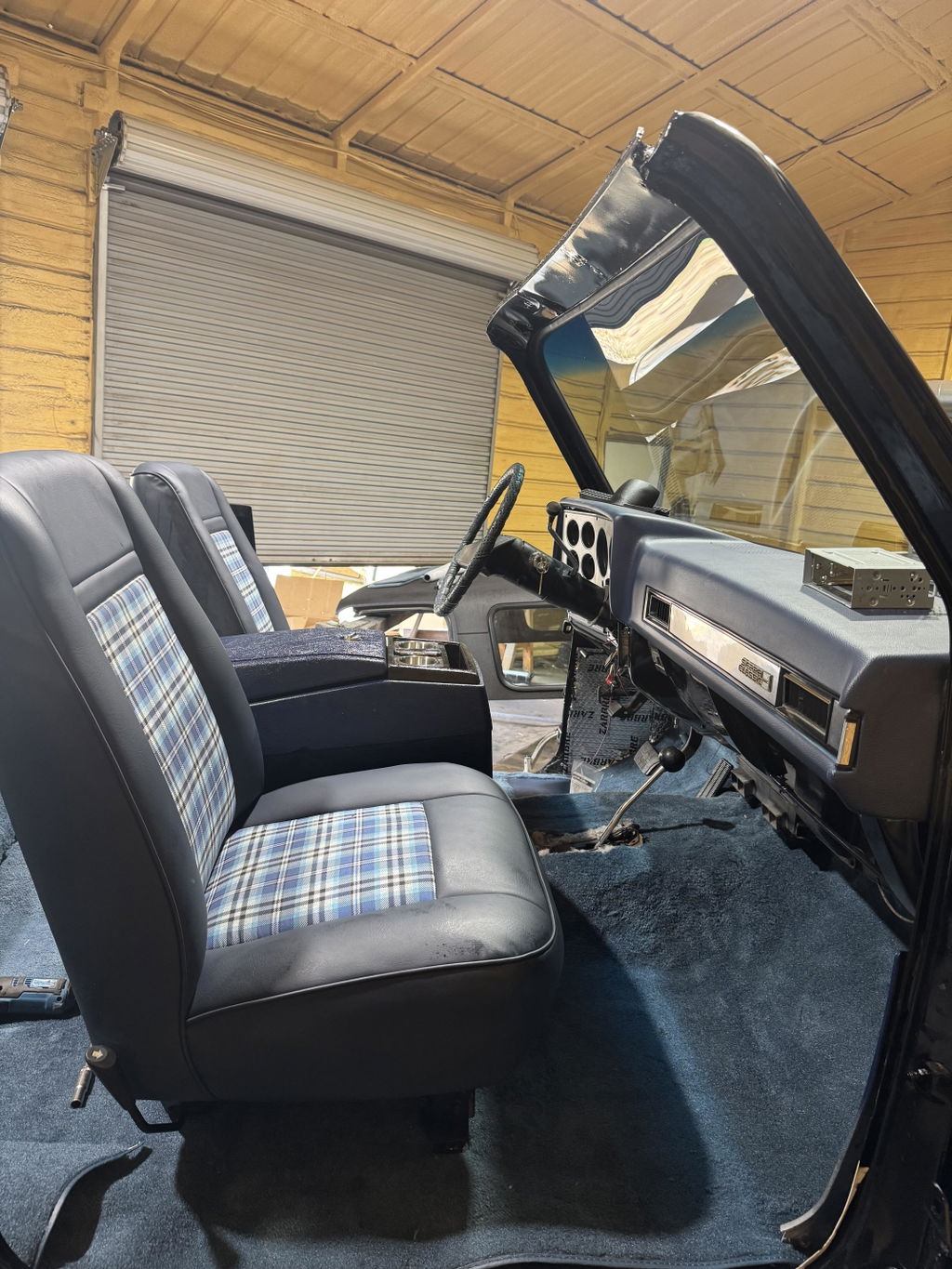
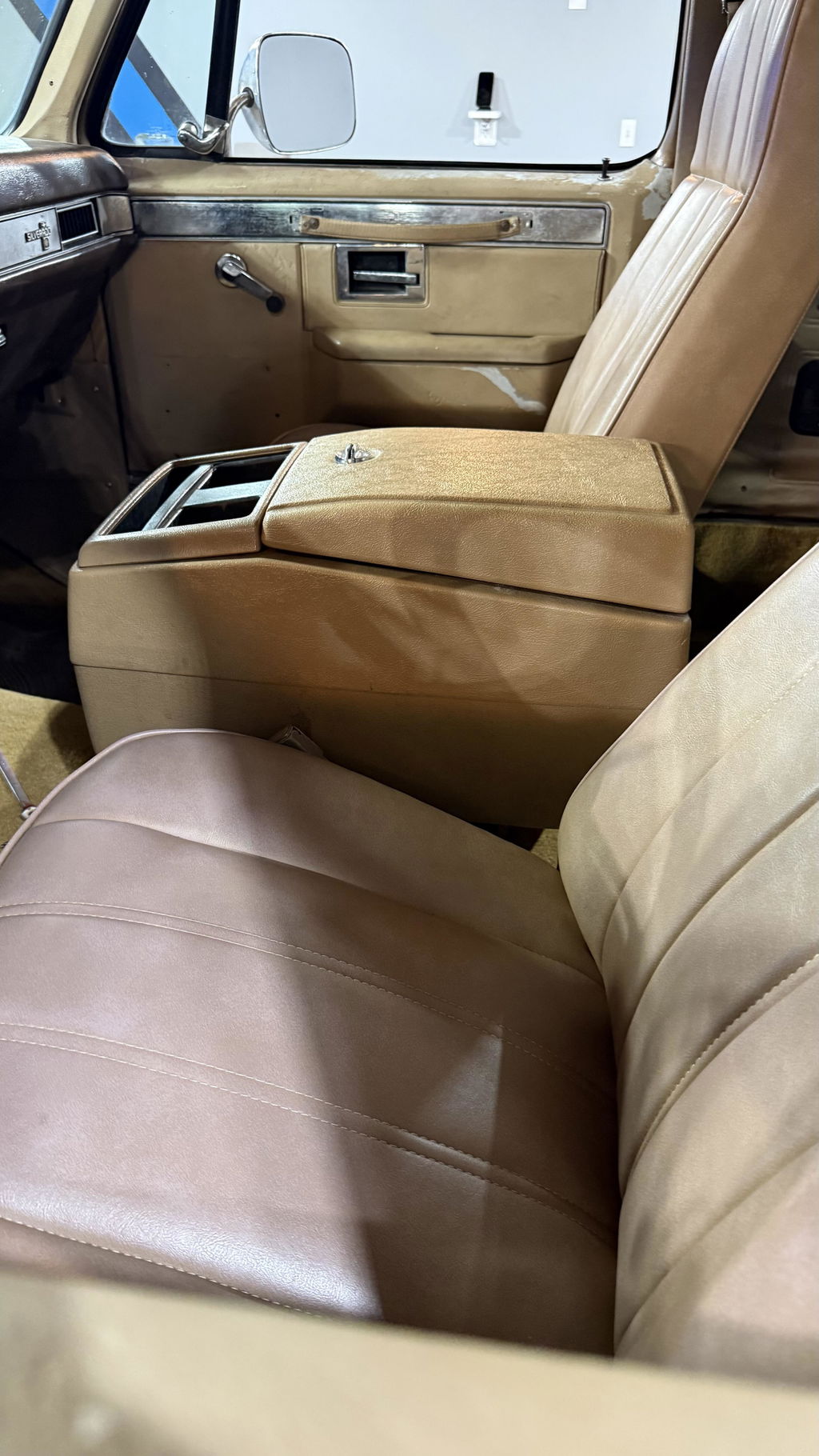
For interior upgrades, start with the cab and door configuration, not just the badge. A part that fits a conventional-cab pickup may not fit a Blazer, Jimmy, or Suburban without confirmation. The dash may look familiar, but details such as door-panel shape, trim level, power-accessory wiring, and speaker provisions can vary.
For mechanical and chassis parts, verify whether the truck is two-wheel drive or four-wheel drive before anything else. An R-series and V-series truck can look nearly identical from the driver’s seat, but their front suspension and drivetrain layouts are not interchangeable. The same goes for half-ton versus three-quarter-ton and one-ton hardware.
If a listing says C/K through 1987 but does not mention R/V, do not assume it is wrong. It may be a part that genuinely fits the carryover platform. On the other hand, if a listing stops at 1987 and your truck is a 1990 Suburban, take a minute to confirm. That extra minute beats ordering twice.
How to Identify What You Have
Start with the easy stuff. Is it a pickup, Blazer, Jimmy, or Suburban? Is it two-wheel drive or four-wheel drive? Is it a 10, 20, or 30 series? Then look at the model year and whether it has the old Squarebody cab and body style.
The VIN and factory service information are the best places to settle questions that badges cannot answer. Check the label in the glovebox for RPO codes if it is still there. Those codes can help confirm axle equipment, suspension options, engine setup, and other factory details. Just remember that a truck can have decades of modifications behind it.
When you are ordering a part, give the supplier the whole truck description. “1989 Chevy Suburban, V-series, four-wheel drive, half-ton” is far more useful than “Squarebody Chevy.” The more complete the description, the less guessing anybody has to do.
The Practical Takeaway
Do not let the R/V badge make you think you have some oddball truck that nobody understands. GM simply renamed the old-body line while the newer C/K trucks took over the regular pickup market. An R is two-wheel drive, a V is four-wheel drive, and the number tells you the basic capacity class.
Treat your R/V like the Squarebody it is, but buy parts with the same care you would use on any 35-year-old truck. Confirm the year, body style, drivetrain, and actual equipment before you order. That is how you keep a simple upgrade from turning into a return label and a Saturday wasted in the driveway.